
Soften To Stay Strong (Tao Te Ching 76)
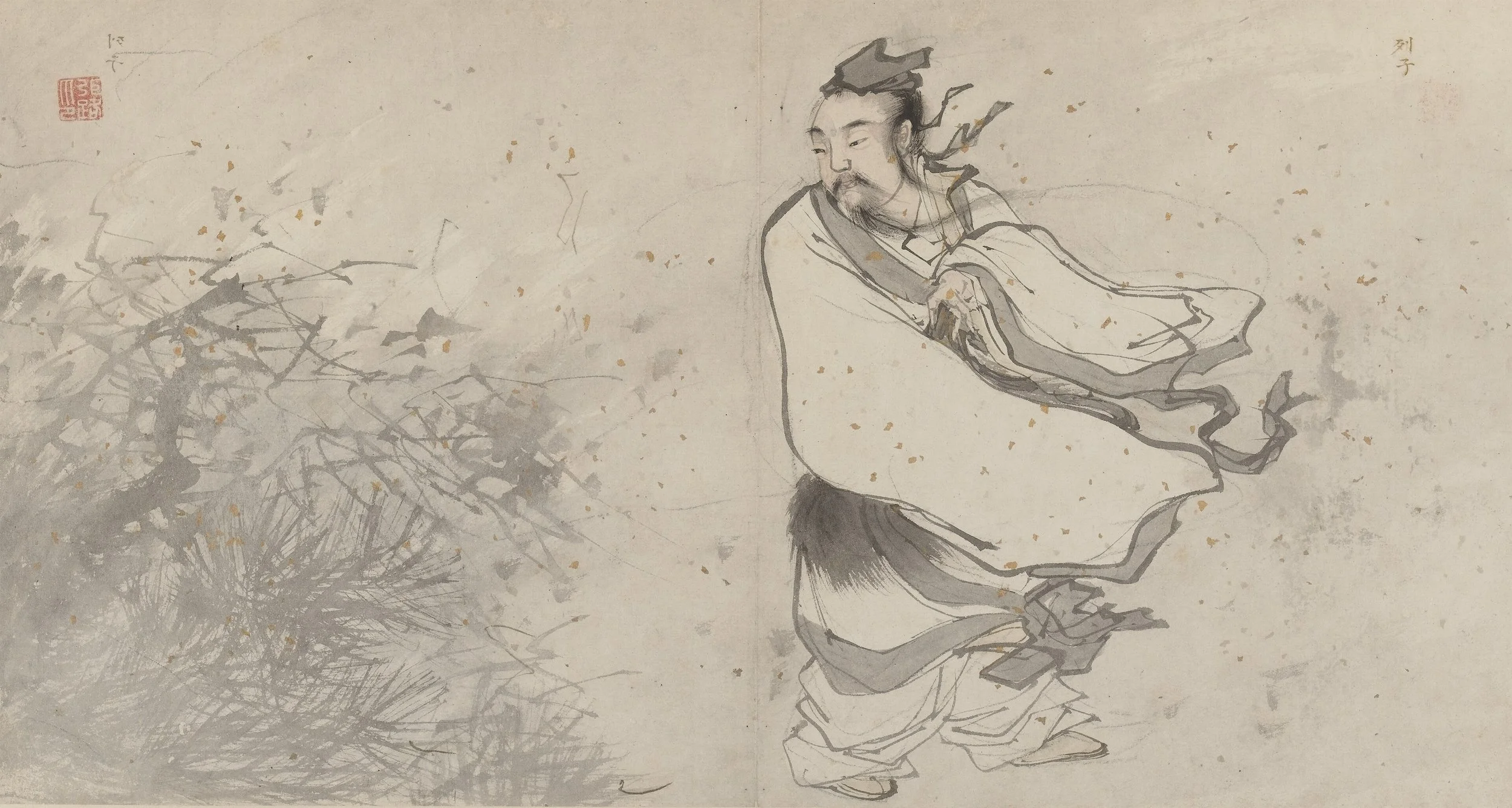
It is important to be flexible rather than brittle in life, in our families, at work, and when it comes to entire nations. After discussing several recent events in the world news and our lives, we discuss the principle in Tao Te Ching 76 that flexibility is related to youth and life but rigidity is associated with death. In other words, we should bend rather than break as we exist in the wins of time. We introduce but do not fully tease out the thesis of Sarah Allan, that we who are conditioned by Western thought should avoid realizing that nature (and water in particular) does not serve as an illustration for divine and abstract realities, but rather is the root metaphor itself and arguably even the root reality.
TRANSCRIPT
0:00
Hey friends, thanks for being with us for another episode of the Protect Your Noggin podcast.
This is a show about looking for happiness, daring to hope for happiness, not just for ourselves, but but for other people amid the ruins of politics and religion.
0:17
For today's show, we're talking about Chapter 76 of the Dow to Jing.
And before we get to that, we're going to talk about just a few interesting bits of news that have been experienced by us humans and since the last time we were releasing a show.
0:36
And this show, though, is about being flexible.
It is the value in nature by studying nature and studying the ways that flexible things tend to do better than rigid things, or even if better is not the word.
0:54
Flexible is what life is about.
Rigidity is what death is about.
If you want to live, be flexible.
That's what this topic is in chapter 76.
Glad you're with us.
Let's go.
1:19
Oh that's nice friends.
We are in the middle of summer and it is the Mojave Desert and just a couple days ago it felt like we were in in a furnace.
Maybe it was 112.
But today, what is it, Stacey?
Today?
Well, at the moment it is 99°.
1:38
So nice.
Well, and I think that the reason that it is that low because that is low for us, is that the big wind is coming.
But it doesn't always.
I mean, sometimes it's like a convection oven, you know, you can still be hot.
But anyway.
Yeah.
1:54
But a lot of times if it's if it does get cooler, there's some wind that is bringing in a different airflow.
From somewhere it just get it.
It's a breeze.
It's a breeze.
One of the things I never expected to love so much about this part of the world is that it is one of those spaces in the world where I can see the earth breathing.
2:17
I can feel like we're in like the esophagus or not the esophagus.
I to to mix the metaphor here, we're in this, this windpipe of the western half of the United States, but really part of the flow of the whole Organism of earth.
And it it is only been rivaled by our time when we were in the Orient Land Trust hike, looking out over over that one vast valley in Colorado outside of our favorite Hot Springs, where maybe our second favorite Hot Springs or maybe our third favorite Hot Springs.
2:52
But it's in the top three.
And, and it's just magnificent to be able to see that.
And it's it's because of what I'm reading in these early Chinese texts about the importance of learning from the the root metaphor, to use the language of Sarah Allen in her book, The Way of Water and Sprouts of Virtue, which we'll talk about in a moment.
3:17
To be able to see that this valley is not just a symbol of some divine power or some great idea.
All those things are not as real and as important as the actual river flowing.
3:34
That is the Dow, the river flowing and looking down on it from where I am sitting right now in the 19 foot studio, that is kind of looking at the Dow as opposed to looking at something that's a metaphor or a or a or a symbol for this other thing.
3:55
It is the thing.
Yeah, aren't there a lot of Zen Cohens about water and river?
Well, water for sure, but I, but I think if you look at Sarah Allen, yes, Zen, but Zen probably, you know, you can't get to Zen without passing through the Daoist teachers of China.
4:14
Yeah, that's where you get it in China and then on to to Japan.
And it's in according to this book that I'm itching to talk about.
And we promised we talked about it in the last episode.
Is the the point being, I just love.
I just love how the the world, you can feel it, even though I don't like when it's 112°.
4:37
Yeah, it helps me feel like I'm in touch with the planet that I'm on when I feel those changes.
Well, and then all obviously what you like about riding a motorcycle as well, right, 'cause when you're driving through you feel cold pressure.
4:53
I smell everybody's breakfast.
Yes, you know, but you smell.
Yeah, I smell the crematorium.
I smell the water filtration.
But I mean, yeah, in a way, I didn't think of it that way, but that is it is very motorcycle riding is very much like a kind of Taoist meditation.
5:10
Yeah, yeah.
I mean, all your focus also needs to be in the present moment on your motorcycle and the road, the conditions of the road, everything around you.
But anyway, that's one of the things.
You're making a really good case because we're we're in the we're in the hunt for a van right now, friends.
5:26
We've been kind of stalled.
We're trying to get out on the road here.
We're looking for a van.
And man, there's been a lot of scammers, you know, people just not turning out to be a legit when we check it out.
I've never been in.
I don't understand the desire for a fake ad, but I mean.
5:42
We sure had a few of them.
Apparently there's something to it.
Whether they're doing it for marketing purposes, selling your information, I have no clue.
But regardless, it definitely feels like there's yeah, I don't understand.
But there's a lot of fake, fake car vehicle a lot.
5:58
Of phonies.
Especially, well, I mean, it used to be like, couldn't, well, you can't really trust anything on Craigslist, it seems.
So this is now Facebook Marketplace, but it feels like it's getting to be what Craigslist was.
But you at least have something to work with.
You can see if these people have real names with actual family members.
6:14
That's what's been very difficult, finding a van we like and then going to see the profile of the person in Facebook and they're not obviously fake.
Yeah, or you know, or business, you know, that's the other thing.
People I don't really we're what we're kind of after is a little bit of an investment, but we want to know, we want to know the history of, you know, the maintenance and everything.
6:37
Like just if it's just somebody that has bought up a vehicle and auction and whatever, like they, you know, they maybe know, I mean Carfax will tell you some of the story, but we want somebody that's like a private seller that can actually that's actually cared for a vehicle.
6:53
Yes.
So we're interested in getting back out there, putting our feet in the Columbia River.
If you have that perfect van that you want to sell us.
Right now we're looking for a Ford E series that's more than we need to share.
But again, as promised, we are going to talk about Chapter 76 of the Dauda Jing and we're going to see if that has any interesting applications for what's going on in the world today and in the news and in life.
7:16
But I just wanted to go through a, a random list of things that I just wanted to talk about with you, dear listener.
And they don't necessarily fit the theme directly, although the first one may.
And that is I have tried a new pair of unsponsored sandals.
These are called earth runners.
7:33
There's a thing that if you don't know about it, there's kind of a woo pseudoscience thing where people try, they put copper on the bottom of their shoes so they can get grounded into the earth like electrical, electrically grounded.
I don't think that that's true at all.
I think that that's that's it's it's beautiful have have your beliefs.
7:51
I don't think it's true.
So it actually detracts a little bit for me.
I don't want to have something that's.
Got a little woo in it.
Well, I don't mind.
I love the every.
I I love things aesthetically that have woo in it.
But this is the kind of woo.
It's this is the kind of woo that is like pseudoscience.
8:09
Yeah.
That I don't.
Know Has your anxiety gone down?
Oh yeah, I'm feeling great.
But the reason I feel great, I love these because last a couple shows ago we talked about products that we like that we're not getting sponsored by, right.
And we have the Luna sandals, which we love and I still love.
8:25
Those are very rugged.
Got mine on right now.
These are even thinner.
They have a hemp top and it's just I it feels like I'm barefoot even more so I'm I'm the kind of guy going into that extreme.
I probably would keep always have a Lunas sandal pair around for kayaking because these these will work.
8:45
But it just feels so good on when we're going in the river and you're you're putting that kayak out there and you're stepping on all that weird stuff on the bait the bottom.
It feels so good, don't you think?
Stacey with our.
Oh yeah, our current one.
But anyway, but I love the the Earthrunners, they may be moving into the lead of my footwear.
9:00
You got a compliment from somebody the other day when you were wearing.
A lady, a lady complimented me on my sandals.
These are in like a, like a turquoise or something.
And then the second thing that was in the news is we went to the we went to the thrift store and got a $17.00 Instant Pot.
9:20
Insta pot, yeah.
The it's actually, I always said Insta pot, but it's actually instant space pot and that's my fault.
But it's a pressure cooker that is really popular amongst RV life people because when it's 112° outside, I don't want to compromise the coolness of the inside and be bacon.
9:40
So we know we're late to the.
We are way late.
To the pot game there was a.
Craze.
There was a craze.
Which is, you know, to our benefit because I said, you know what, since we are late to the game, there's got to be a really good chance this is at a thrift store.
9:55
So we were able to go and find one and like you said, for $17.00 and it has been a game changer for us in our small little place, especially in the middle of the desert when it's hot and we're trying to figure out a way to cook that doesn't add to too much of the heat in the place.
10:15
Or take up space.
Or take up too much space.
Or the other thing too is even outside when we're cooking outside, sometimes it's just either too hot or too windy to really be out there for very long.
And that is slowed down sometimes when we want to do our griddling and that kind of thing.
10:31
So this now is a solution that also because we are in Arizona and it's a very dry climate for the most part.
Although oddly, we are getting some more humidity and moving into the monsoon season and there might be some more rains coming our way over the summer we're hearing.
10:49
But all of that to say that the additional steam that's in the place the moisture is helpful because it's such a dry climate yes, so it.
Is it is?
You're right.
It doesn't hurt us to cook in it, is all I'm trying to say.
But the thing that blew my mind is I have, we've got a whole bunch of like survival foods and stuff in our little tiny space.
11:09
And I'm thinking, well, maybe it's time to kind of cycle this survival stash through.
We've got beans and rice from COVID, I guess.
But I, I hate making beans because it's, it's always eluded me.
I've always failed.
I've always soaked them overnight.
11:26
And it just felt like I could never get them to be soft.
So I underestimated how powerful this thing was.
But I took these beans, these black beans, and I cooked it in, in 45 minutes.
And I could have cooked it in 35 minutes.
Yeah, yeah.
And it was.
I didn't believe it was possible.
11:41
And they were the most delightful, wonderful beans.
You didn't overnight soak them now.
Where did I get these beans?
From the side of a dumpster.
So somebody got food assistance from a local church and then they didn't want the beans or they didn't have a way to cook the beans.
So they.
Left them they in the box.
In the box they left a big thing of rice, a big thing of beans, a couple of cans of tomato sauce, the thing of peanut butter.
12:04
So I grabbed this and I'm thinking and I take half so this is free now the half the beans and then I throw stuff that's going to go bad anyway in the the kitten.
Some onions.
And some pepper.
And some garlic.
12:20
So, so I put the beans in there.
Oh, and the key of course is you get a good broth.
You don't just put it in.
No.
So if I put in the good broth, like the garlic, better than bouillon, it tastes so good.
I don't need anything else in the world.
Maybe some rice.
But anyway, we cooked half of a bag that was like a little bag that they gave away for free for food assistance.
12:44
We were eating.
Beans we gave some to your parents one half 1/2 of.
I'm like, this is the game changer.
We definitely should probably only do a quarter of a bag next time for the two of us because it felt like we had beans coming out of.
Our ears, but I loved it and we, in fact, we haven't finished it because we've got a few burritos up here.
13:01
Anyway, the point is, in these difficult times, friends, if you're trying to have fun, go to the thrift store, see if you can get yourself an Instant Pot or get one online.
They're about 100 bucks.
But if you really will use it, you can make really inexpensive bean and rice dishes and it's very consistent.
13:19
I also within it took two minutes.
I made quail eggs and I'm pickling some quail eggs.
Tell you how that turns out and.
The other thing that was about two minutes was corn on the cob, which again, we don't usually make because boiling that water would take so long and so much heat added to our place.
13:36
So being able to do it in the Instant Pot made it very accessible.
Again, love, love, love.
What we're finding with that and being able to stretch all of our food is great.
That's in the our personal news.
Then in the international news, there was a cage fight in front of the White House.
13:53
And this is one of those things where it's so it's so spot on.
It's so on the nose of, of, of, of insane and clownish and, and kind of a parody of, of Caesar.
And there's, from what I understand, there was the White House backdrop in front of the actual White House.
14:14
You know, of all the things I'll give them, I'll give them that.
That's just a, you know, television friendly.
Why is this happening?
Why, why is this why, why the circus?
It the circus?
And I have to say I kind of got got a little overloaded there for a second.
14:30
So I did had to do a little meditation got done with the school year.
But I just wanted to say to the dear listener, why are we not going to have more to break down?
There's nothing to break down.
I just want to tell you, dear listener, that if that stresses you out, if that makes you feel weird, you know that that's going on.
14:48
There's other people that noticed that we we would we're just going to acknowledge that that's weird, but to the point of the show, it is.
And this is actually where we can.
Well, we're not going to quite.
I got one more story, but I will say this is the opposite of the leader that has the Tian Ming, the the divine mandate.
15:09
It's actually not the divine mandate, which I'll explain.
It's the mandate of heaven.
The ruler who is pushing absurdly against what is natural is going to fail.
15:26
And you don't necessarily have to do anything about it.
Let's just do a little preview of this because as a as a way of thinking about a lot of these chapters at the end of the doubted Jing are about politics.
Or yeah, politics, military.
15:44
Yeah.
How you run a country?
So so let's just pause for a second on this on this issue when there is this UFC fight in front of the White House, This is glorifying violence, which the doubted jinx says you don't want to do that.
I'm not even we even had a great conversation with with the you know, Justin Wren, you know, on a previous podcast.
16:04
He's a great guy.
We love him and he kind of convinced me to enjoy the, the, the, the sport.
I still can't really watch it, but it I do appreciate it more.
But the idea that this is the thing that we're glorifying at the front of the OR at the heart of the nation, this is what certainly the Dow Jing would say, this is not what we do.
16:27
Well, and it just it reminded me of what the gladiators and like.
The hyper masculinity.
King sitting there watching the the servants sort of fight and.
It was not a good look die.
And I think that's part of it.
I think I think the aesthetic, the stomping on America's aesthetic values is part of the point.
16:48
It's, it's, it is an abusive move.
In other words, there's always been the sense that there is a certain decorum in the White House.
There's a certain kind of dignity.
And that that gave us a sense that even when things got a little silly politically, there was a level at which in American politics everything was fine.
17:07
You know, decorum.
There was professionalism.
And I think the, the urinating on the professionalism and the values related to the way we used to think about treating the flag with respect, treating the national common treasures and and public spaces to to mess with these things is part of the point.
17:31
Just like an abusive person is going to mess with your stuff, a bully's going to mess with your stuff.
Move your book books.
It's to say, I can do this if I want to.
And, and I and I just think we should, we should recognize this.
You were you were talking about how the IT seems that the the Washington is having a hard time with the Dow of algae.
17:52
Oh yeah, yeah, yeah.
So what the?
The reflecting pool.
Yeah, the reflecting pool, Well, I think you explained the science of it of if you go and paint it blue, right?
I, I, if I'm, if I'm remembering it correctly, painting the inside blue is this artificial way of making it look like water, but now it's green because of science.
18:17
If you have the warm colours, or if the, if you have the darker colours absorbing the, the heat and you have a shallow water, you're going to get very warm water.
Then you get the algae blooms and birds are flying in.
There's nothing now you're now they're pouring in the hydrogen peroxide to kill the algae.
18:35
But how do you keep up if you don't understand the flow of water, which is indeed our topic today?
Well, and that's probably another piece of it too.
Is not enough water movement right in that in that pool?
Right, because you need it to be still, which is a big theme of the Chinese stuff, the Chinese philosophy here, where water is valuable because when it's still, you can use it as a mirror.
18:59
And then as we know from what we understand the parts along the Colorado River and the lakes that if there is.
But if they're too still if.
It's still and, or, or if for some reason water gets behind shallower areas and it's just a pool of water, that's where all the fun things, amoebas and all kinds of stuff grow and make it very unhealthy.
19:22
So so.
You do want it to move.
So, yeah, so I mean, and that's just like, you know, if you're out in the summertime and you're at a lake or a river, look for water flow and stay in the arts where the water is flowing.
Because there's a little like I even remember up in Washington where we would go camping, yeah, there was 1 area that some of the tadpoles and stuff would end up.
19:44
Yes.
Being off to the side and kind of stuck away from the rest of the river, that water was a lot.
Warmer.
Those were baby salmon, by the way.
Oh OK, much more fun.
But yeah, so sorry.
But anyway, so.
Don't be sorry, I just sitting.
Sitting in a pool with baby salmon sounds delightful.
And if I read out every coil of the idea of sitting at a swamp, yeah.
20:03
With little tadpoles.
I love tadpoles but I don't want to sit.
Yeah, salmon it makes.
Sense for the for the reason you're mentioning.
But what I'm saying is, is that that area that was kind of sectioned off sometimes we were like, oh, hope these baby, you know, fish don't die is that that area was warmer but was cut off from the rest.
20:22
But then that is where even though it's warmer, that's why you don't want to go in that part because.
We don't want to go for sure.
Right, because it's not healthy for us.
Yeah, parasites and all that stuff.
But what does this all take it?
The Dowda Jing and other Chinese texts from the ancient world thousands of years ago said if you want to be a good ruler, you should study water and understand it.
20:40
So it is not this is this is the key for today's show.
Again, based on the interesting thesis of Sarah Allen, The Way of Water and Sprouts of Virtue is her book.
She's basically saying that what the Dao Da Jing and other Chinese texts around the same time are saying about water is that you actually need to understand water.
21:03
And I know it sounds simple, if you like, if I say it, you might think well, of course, but it's so different from the way philosophically Western culture has gone, because Western culture has gone from the perspective of these ideas, these big ideas.
21:19
Now I'm going to take these big ideas and apply it to water.
I think that's what happened with the reflecting pond.
You've got these ideas of what's look, what's going to look good, but you don't, You don't treat the water with the dignity or forget about dignity.
21:39
You've got to understand water.
If you don't understand water, you're not going to accomplish the thing that you want to do either in a pool or in statecraft.
In other words, the Delta Jing would say, if you don't understand water, you're not going to understand how to govern a country.
And there you go.
21:55
And I think that's where we're at now.
We're going to have to wait to see what happens with all of this after the next round of elections.
But it does seem, it does seem to me, I'm going to make this this early prediction that there are enough people frustrated with what happened with Iran and the fact that you've got a trillionaire in Elon Musk.
22:16
While people are having a hard time affording basic needs.
I do think that we're at a spot where America be may be ready to be healed.
Let me just interject something from the book because the way we've been doing this, this is my fault, friends.
22:35
But it's summer, we're having fun.
I just wanted to talk about some random things before we get to 76.
But one of the things that Sarah Allen in her book is talking about here is, do you remember the parable of the sower in the seeds as told by Jesus?
22:53
So I believe so, but it's also closer to other ones too.
So do.
Your best and I even if you make a mistake, that'll be great because it'll help to illustrate like how do you remember it?
The soda and the seeds.
There's no mistakes.
So, and I could be mixing this up with other parables, but the idea is seeds get dropped into different types of ground.
23:17
Yep, and some of.
Them.
Some of them will will survive and some of them don't.
So what if it's in a rocky ground?
Yes, then those ones don't survive, right?
If it's too sandy, it also doesn't survive because the sand blows away, right?
23:36
Right.
So it needs to be just right.
It needs to be.
If it has too many weeds that choke it out, it's no good, right?
So the soil needs to be now what was the, what's the, what's the implication?
Well, what's the point of that?
I mean, I think it was often used to illustrate your, you know, like what you would want in your life and your relationship with God and what you are like, how you're nurturing it, right?
24:05
OK, OK, so right.
Like are you are you having quiet time for the seed to be sown in your heart or something like this?
Yeah.
And like and also it could be so there, there's that portion of it.
It also could be connected to what kind of Christian you might be.
24:23
Interesting.
No, this is good because that, because I can see that because you grew up more in the in the evangelical world.
So you've got to have the quiet time.
This is that evangelical theme of you've got to be, you know?
What kind of what you?
Go to a revival.
What are you doing to nurture your seeds?
24:39
Yeah, so you go.
So one of the things you could do is you could go on Monday nights to Calvary Chapel where they're going to do an altar call and you're going to hear people's testimonies.
Or just daily devotion and prayer.
For me, most of the time it was.
And of course, there was a lot more Calvinism in my studies.
25:00
By the way, even though we went to the same church when we were kids, I with that church, there were Calvinists and Armenians in the same church.
So I was kind of leaning toward, you know, the Calvinist side.
But the idea is, why is it that some people go to, this is the way I thought about it as a teenager, Why is it that some people go to hell and some people go to heaven based on faith?
25:21
Well, if you're a bad person, that is your heart is bad soil.
Then when the gospel is preached to you, you say no because you're a Jackass.
So you're going to hell because this gift was offered to you, but you're just like a Jackass.
25:39
Your heart is you're like, you're not a good soil.
So there's something ontologically wrong with the people that do not receive the good news, right?
OK.
But I don't think that's entailed by the text itself.
But the weed part, so the weeds part to me smacked of kind of like why you like why are friend Courtney couldn't hang out with you because you would be a bad influence for her to the way you would look because you had long hair.
26:08
And that would be the weeds that's going to choke out.
Her face, yes, and and.
Oh, there's so many things, yeah.
Anyway, that's the kind of like, but what, what would the weeds be in that scenario of what the way you're looking at it rather than bad influences or temptations or I don't know, or just bad things that are around you or something like to choke you out.
26:26
Well, well, this is, this is the point I, I, I'm interested in, in re looking at it in terms of, of the way the Chinese philosophers would think of it.
I guess what I'm saying is when I was reading this book, I was looking at these, these images of nature in Confucius and Mencius and Lao Tzu and Shuangxu and Sun Tzu.
26:48
And I'm seeing this and I'm thinking if I read Jesus in that parable of the sower through the lens of the concrete images or the concrete realities that the Chinese would say, what they'd be saying is you're not going to have transformation.
27:06
You're not going to have the good life as an individual in a world where there's like overwhelming evil.
In other words, the revolution can't happen in 1980s because everybody's getting mesmerized by hyper capitalist like Coke commercials.
27:26
OK.
There's something going on in the world that makes it.
It's like in the Hindus, they call it the Kali Yuga.
It's like you can't get enlightenment very easily or at all in this age.
You're so worried about money and violence and hatred and like, this is not something that you can meditate your way out of.
27:45
There's a tradition in, in, in Buddhism, a teaching of Buddhism that recognizes this.
There's a, there's Confucius is where I'm drawing from here, that there's a time when it doesn't matter how good of a politician you are, if the world is so sick that you doing virtuous leadership and, and you having the philosophy that you've drawn from the Chinese masters.
28:11
If you go in and try to rule in a in the wrong time, no one's going to listen to you.
And I don't even think rule's the right word.
But if you're going to go be a leader in a time in a certain time, you might not be able to be a leader in a certain time just because of the unique sickness of that time.
28:29
Yeah, and I remembered because you were saying something as an example before and I can't remember.
Well, I said on the last show, we can't.
We're not going to have a revolution until people get to their wit's end.
Yeah, In terms of wait a minute, this is not working for me.
28:47
This, this, you know, agreement, this contract.
So that's a type of soil.
I don't think you can have a, a, an emancipatory revolution in the 1980s.
It just wasn't going to happen.
That's.
Not the message that people are going to be.
Listening What's the soil?
29:02
The soil is the times.
Yeah, the soil is the season.
OK, well, let me read it from the perspective if I can, from Sarah Allen, she writes.
Confucius declared that neither he nor the Sky Heaven need speak because The Four Seasons proceed therein and the 100 living things.
29:23
He said the 100 things, whereas Lao Tzu socks about the 10,000 things, but it's the same things are generated thereby that she writes here.
The Sky Heaven governs the natural order and the generation of the living things, which are identified with the passing of The Four Seasons.
29:42
The living things, as we have already seen, include plants, animals and people.
And sky heaven, that's sky slash heaven, govern the seasonality or timeliness that determined the success or failure of human actions as well as that of the other living beings.
29:58
And here's the key point that I highlighted.
But just as a plant, however good the seed cannot thrive out of season, so to a person cannot flower when the times are unfavorable.
So this is again, this is Confucius.
30:15
So you are not, it's not even anything necessarily morally wrong with you when you are not in a brain space and in a society where you're just in a position to be able to hear the liberating message of the teacher, be it Jesus or whatever.
30:34
So do you see?
Do you see what I'm saying?
So they're the poor.
That's why he preached to the poor, right?
He's like, you want you're ready.
Yeah.
And that's why I can't, I can't waste my time with the rich, right?
To convince them about the Kingdom of heaven is like trying to get a camel through an eye of a needle.
30:52
It's impossible.
So I'm going to go to the people that are the outcasts.
Those who have ears to hear.
Those who have ears to hear.
But is it?
But again, he's not, I think I want to go back to it at some point, but I'm not even sure that Jesus is blaming the people for not hearing.
31:08
This is just you're not, you're not in a position to hear.
You're the oppressor class.
And that's what's going on here.
And I think one of the things that that does for us is to say sometimes if your life isn't working out great right now because you're a good person and there's evil that's that's dominating the world, that's just the way it is.
31:27
You don't have to get all up in your head about it.
Do you know what I'm saying?
There's a lot of people that are really great at stuff.
And the world is such now we're like, you know, maybe AI is taking your job, but maybe bad ideas have taken your job.
Maybe what you were doing for your community or your job or whatever cannot be replaced or you maybe you can't be replaced.
31:50
But regardless, there's a season for things.
So you see the seed, if the seed is planted in the middle of summer, it's not going to work.
And it's not a problem of this.
It's not even a problem of the soil.
It's not a problem because I was so, so worried in my whole life going, oh, is there something wrong with my heart?
32:05
Or is there something wrong with somebody's heart?
They're going to go to hell.
I got to get my heart right.
You know what I'm saying?
And with this, these Chinese philosophers, they're saying it's not really about getting your heart right.
It's just kind of coming to terms with what the season is.
Yeah.
Anyway, yeah, no, that makes sense.
32:21
And that's different.
So what's timing?
One of the things that I was thinking in my head for a second was especially when it comes to say, leadership and what kind of leader you might need.
And it may not be time like you were mentioning, like it may not be time, you know, for people to even be able to hear about a revolution or something.
32:38
So a revolutionary leader is not going to be the right timing for, you know, what we need right now when I don't know if this just I want to kind of check this against whether this seems to be a little bit of what you might be saying too.
32:54
It's a little different.
But like, sometimes you need a a medical doctor, sometimes you need a psychiatrist, right?
I think this definitely fits, yeah.
Sometimes, sometimes you just need a teacher like what are you after?
What are you trying to what are you trying?
33:09
What needs, what needs help?
What do you need growth in or whatever, right?
And and so different people perform different tasks, right?
So you don't need a medical doctor.
If I mean it, it might, you might still need a medical doctor if your mental health isn't doing well, because that could also be related.
33:29
But what I'm saying is is depending on what it is, if you're if you're feeling a spiritual sickness, right, going to the medical doctor probably isn't.
They can, they can maybe put a Band-Aid on some of your things, but it's not really going to fix the root problem.
Yes.
So you need people that in other words, there's a season and a time for different root problems things.
33:51
Yes, fix it.
Yeah, there's different problems with different roots.
And no, I think that's, I think that's very helpful.
And the, I think the, the wisdom there is, is very broadly applied by which I mean, I think one of the most dangerous things is to think that.
34:17
And I think it's very, it comes from a very privileged place to think you could do this.
I'd like to be able to do it.
But if your feet are on fire, there are maybe some great meditators that can deal with that.
But you kind of got to deal with that like the Maslow's hierarchy of needs to, if I go to prison someday for some reason that is probably unjust.
34:38
Thank you very much.
I'm going to use meditation to deal with the fact that I'm trapped.
But while I'm getting beat up, I got to, like, deal with that.
OK.
So I mean, there's also that, right?
We need to get people in a position where they're not so traumatized by all the things that are bombarding their space to be able to sit down and say, all right, what are we going to do to make make this world be more livable?
35:09
Does that make sense?
You, you, you, you, you need to feed.
I mean, this is many teachers have said this.
We can have all these philosophical spiritual conversations if you will, but but first we need to get people fed if they're starving to death, if you're starving to death, right, Let's let's tackle that first.
35:27
And so there is there are these different seasons and times, but that's certainly is the whole the whole point of the the the doubted Jing and certainly our chapter, which we will get to right after this one more story.
You ready?
Wait before we do, though, it also reminds me of what could be scary sometimes about either going on vacation or people going on vacation.
35:49
I know that sometimes we've been able to process like when when you've had your summers off and we've been able to travel back in the day when we could afford more of that and gas prices weren't astronomical.
But it gives you when you step outside of a situation and you're like, wait a minute, that was not a healthy situation that I was in.
36:14
And you're just in survival mode when you're going through the motions until you until you don't have to to you step away from it for a second.
Then you can sometimes see whether it's the depth of the unhealthiness, whether it's just, you know, like what I don't know, whatever is causing it, It could just be your own stress level, all of that stuff like what is exactly going on or, or is it an abusive situation, you know, and then but you until you could step away from some of that.
36:49
I think it's just too hard to even really see it.
You need some distance in order to to actually see it.
Well, thank you.
You set me up perfectly for the last story, which is the idea that some people were shocked to find that the TikTok phenomenon, Dan McClellan, who is a Old Testament scholar, and he does a lot of very good work to take modern scholarship and summarize it for people on TikTok.
37:19
I mean, if you want to understand all sorts of things about the Bible, for instance, he, you know, I for a long time I was working on this project about Moloch and what what's what's up with Moloch and why are people worshipping this under underworld deity and killing their babies to.
37:35
It sounded like more of a idea and something further away.
Yeah.
Until you started researching it and it was like, oh, these are like signs of Moloch everywhere.
He.
Yeah, it was.
I mean, it was freaking.
I mean, well, you're you're pointing to the fact that I was using it metaphorically, the demon that's got its fingers in all the different parts of society and I and I realized I it's frightening because it controls everything, right?
38:02
It's it Moloch as a concept.
OK, but turns out that Moloch might just be an epithet or a way of referring to the God could be God, right?
Which is fun and interesting and weird.
38:18
But anyway, damn, McClellan has a lot to say on that.
And he's like 3 times more learned than I am.
I'm getting rusty on the biblical scholarship, right.
And like, that wasn't never my main thing, but I, you know, spent a lot of time with it in in grad school.
But like, he is just excellent.
38:38
And he is most popular amongst kind of ex evangelicals, people that have left fundamentalist Christianity and are kind of deconstructing their old understanding of what the Bible was about.
So if you if you want to know what the Bible was really saying rather than what you assumed it was based on the way you were taught.
38:58
This is the weird thing.
He's basically I trust him more than I trust myself on any biblical text.
May I say that until I do some more research on something?
I'm not saying he's always right.
I'm just saying Dan McClellan, if you want to know what is the most up to date A+ scholarship about any particular part of scripture, Dan Mcclellan's the the guy.
39:22
OK.
Or Bart Ehrman, fine, Bart Ehrman, but Dan McClellan for the Old Testament, Bart Ehrman for the New Testament, Dan McClellan for the Old Testament.
People that are no longer, well, they're not evangelical Christians.
I'll say this, this is the point.
Then people started freaking out.
This is the news.
39:39
It wasn't that he was hiding it, but he can't kind of came out and said, hey, I just want to let you know, I'm not an atheist.
And then people are like, huh, because he was debunking all these things about the way we thought about the Bible.
And he's right about the way everything he says scholarly wise that I've heard is basically, of course, he's spot on.
39:59
I just say thank you for the most part.
Obviously, check the check the footnotes and so forth.
So he's not an atheist, but Dan McClellan also is a Mormon.
He's a member of the Latter Day Saints Church, current member.
He's a, he's a current member in good standing of the LDS church.
40:18
And he was a converted age 20.
And this freaked people the heck out.
And I will say it freaked, it freaked me out, right.
And it's not that I have a problem with somebody inherently because they're a Mormon.
My problem is that Mormonism is a, is a high control religion.
40:37
It's dangerous in terms of the power and money and control that it has.
And for a scholar, it's kind of it's it's kind of laughable if we're getting into the game of what is historically accurate.
40:55
OK, Like how could you believe that that Joseph Smith found these golden plates?
I mean, just read the history of the thing and it's it's most, it's laughable.
OK.
Now, I'm not saying that to be a jerk.
I'm just saying, like to me at least, OK, to me as a person who has now come to a place where I appreciate the scholarship, the objective scholarship of Dan McClellan or the seeming of the objective scholarship about biblical texts.
41:24
If you're going to go with them by like dealing with things as they obviously are true in the scientific and historical record and therefore not accept superstitious ways of thinking in the Bible or or interpretations of the Bible.
If that's the way you're going to go, how do you then go and say Jesus talked to the Indians?
41:44
Do you know what I'm saying?
Yeah.
And that, and I've read the I've read the Book of Mormon.
It just, it just looks like something somebody wrote, OK, made-up.
Now you could say, of course that's true of, you know, like all religious texts, fine.
But this one, OK, there's, there's Scientology, but this one's pretty obvious.
42:04
So the, the point is that this freaked people out.
How is it that he's debunking so in in such a helpful way for people that used to be fundamentalist Christians?
They're getting free of mental slavery through the Old Testament understandings of the Old Testament about gender or what's a biblical marriage or what does the Bible say about homosexuality?
42:25
Dan McClelland liberated them from fundamentalism and yet he himself is a, is a Mormon and and he doesn't want to talk about it.
And I'm not here to even explain that other than to say I saw in his eyes, I saw a, a TikTok video where I saw in his eyes a little bit of a fury and a little bit of a fear and a little bit of a panic.
42:48
And that sounds like I'm interpreting way too much.
Maybe I'm projecting, but let me project for just a moment.
And the projection is that's where I was at a moment in my life where I was, I was starting to see things and I was starting to feel OK about accepting evidence for the first time in my life and not trying to just cram it into the dogmatism that I had come to the texts with.
43:14
Let them just speak for themselves.
But I'm in a financially difficult situation now, and I live far farther away from where I originally lived because I couldn't, I couldn't agree with my with the the the facts as I saw them and a an archaic dogmatism in the Lutheran Church.
43:40
So at any moment, I was always worried that somebody would just say, hey, that was a really good paper that you presented at the conference here.
But aren't you Missouri Synod Lutheran?
Wow, that's really interesting.
I like I like your take on I like your take on Nietzsche here.
43:55
That makes sense.
Hey, aren't you a Missouri Synod Lutheran?
And the implication would be I would actually at the time of even said yeah, well, well, well placed.
How can I be nuanced about all these areas of philosophy and history and and biblical scholarship?
44:12
How can I be nuanced and accept cutting edge research there and be in such a denominational tradition that is so rigid it can't flex with new new insights?
So how can you be a scholar that's enjoying discovering and then sharing about new insights when by default your paycheck or your identity or your allegiance is to this very, very backwards version of religion?
44:44
Because it's not the only kind.
It's not the damn Mcclellan's and Episcopalian or Presbyterian, you know, that has a nuanced way of understanding the divine and all this.
Now, I'm sure that there is much more diversity behind the scenes within Mormon thought, right?
45:06
Yeah, that's fine.
Well, and but how do you do it?
But how do you do it when you still have to recognize some of the things that the church as the church is doing?
Yes.
And so I think in an interview that I heard him give, first of all, there's a certain boundary that he has about his own faith.
45:26
So we don't know.
We don't know the story.
All of what?
And I would have told you I'm trying to change it from within or I've got my.
I mean, he probably has his reasons.
Yeah.
And I do know that he doesn't seem to have any issues with his face connected to that body, Right.
45:46
But he doesn't necessarily say that he agrees with everything that they say either.
So he's not trying to say he's.
Walking a fine line.
Yeah, there's a fine line and anyway, so and.
That was.
It's hard because then I mean, when I was wrapping my brain around it as well, then I'm sitting there thinking.
46:07
It's really hard to think of the credibility of anything.
I mean like in other words, if he, if he can stay and be a member in good standing with this body.
46:22
Yeah, how?
How can you be trusted?
So right, yeah, how can you be trusted then on other things?
And so it's.
Just one thing that you know is not true that you're going to keep for social or financial.
Reasons.
And again, we don't know what he thinks is true or not true.
46:38
But that's what I But that's where.
I was and so that's where I was if if indeed he could hold in balance this one thing over here and then have all these other things that maybe go directly against that.
46:57
I mean, it's, it's hard, like, I mean, I, I guess I, I, but I just don't think that that's what we can, we can't do that ourselves.
Yeah, but we recognize it was hard.
We've we've lost community.
It's not that the people in our life before aren't even overly generously reaching out to us.
47:16
It's just that, you know?
It's it's you.
Lose You lose a family when you lose your.
You lose your family, you're.
I mean, a big, huge support network.
Job stability.
Yeah, like it's like it's really hard as you know, right now I'm searching for work, right?
47:33
I mean, I can still always substitute, but I you know.
I'm looking for a more long term solution for myself, either locally or remote and.
What would have been great if you could just, you know.
If I could have just walked over to a church, you know and and saw, well, you.
47:50
Wouldn't even be in this situation in the 1st place, you would perfectly happily working for a Christian university and alumni relations or or.
I could have, you know, yeah, you'd be running it.
Other things I could do, yeah.
You know, definitely you can.
If you don't believe.
It my whole yeah.
So I had to kind of rethink everything.
48:08
And then also yeah, anyway, yeah, I don't know.
I I don't know how how he does.
And so there is that piece of it makes you really wonder like how much of everything can you trust?
So I don't know.
That is something.
48:23
Yeah, Well, and, and, and I think that I think he's probably very trustworthy and he's got some reason that's probably morally ambiguous and difficult for him.
I'm just suspect suspecting that because that's where I was and.
But he no longer works for the denomination, right?
He's 'cause he was working for the denomination.
48:40
Pension.
I don't know.
I don't know.
And maybe we'll interview him sometime, but I don't think it's important enough to to to say the individual situation.
I don't even think he wants to talk about it.
But I think part of our problem is we are also entangled in so many different cultural and financial ways with things that are morally dubious, whether it's who you know, do you are you a teller at a bank?
49:04
You're not an evil person, but you're still probably working for one of the most evil entities on the earth.
Yeah, You're you're the gas they should employ like we're all somehow.
Somehow every.
Down the line or up the line involved in these corrupt systems and that's very very difficult to escape but the the one thing now if I can then transition we're going to take a break here and then when we come back we will talk about chapter 76 which is about being flexible.
49:33
But let me say this I am I am very interested in dialogue with folks that would identify as religious people as long as they are in a in a they're coming from a perspective that is fluid and flexible.
49:50
I think the biggest problem if that's why in doubted Jane chapter one, it says the Dow set forth as dogmatism, you know, or the Dow set forth as dogma is not the Dow and that's the problem.
So if Mormonism wants to change to saying, well, look, you know, Joseph Smith kind of used these things symbolically and we're going to continue to evolve and and transform.
50:12
That's something that's interesting, right?
Being able to be in a, in a religious context that is able to absorb and wrestle with in a very positive way, reality and truth and science, that's going to be very helpful.
50:28
But once you get to something that's rigid and says we cannot change our views about anything, whether it's shellfish or two men being in love, well, that's too rigid.
And thousands of years ago, a dude named Loud Sue said that's the way of death.
You got to get flexible.
50:44
We'll come back and talk about that in just a moment.
51:42
OK, nice breather.
Would you read for us Chapter 76?
Yes.
Of the doubted gene.
So, chapter 76 A body is soft and flexible at birth, but hard and stiff at death.
52:03
That's how it is with all living things, including grass and trees.
They are soft and tender at birth, but dry and brittle at death.
So disciples of death are hard and stiff, whereas disciples of life are soft and flexible.
52:22
Likewise, A rigid military can be defeated.
A big tree can be chopped down.
The mighty and powerful will sorry.
The mighty and powerful will be humbled.
The meek shall inherit the earth.
52:39
Now, that was one of maybe 5 or less, 5 or less times when we intentionally alluded to a biblical text.
Again, not to try to Christianize the Dauda Jiang, but to kind of provide these areas of similarity that would be kind of little bridges to kind of help people into it from a Western, in our case, Christian background.
53:02
Of course, Jesus in the Sermon on the Mount says the meek shall inherit the earth.
And people have laughed at that, including sting, you know, like, well, look, the meek are getting crushed.
And in many ways it is a really difficult concept, that idea that the meek will inherit the earth.
53:22
And the reason I wanted to put it in here is that I think it's not that I'm trying to say that I'm not trying to baptize the Dauda Jing.
I'm trying to also interpret with this line when Jesus says the meek shall inherit the earth, that sounds stupid.
53:40
The meek shall inherit the earth if the rigid and powerful people aren't on a self destruct destructive course.
In other words, if you really want to think about what the Dow to Jing was about, it is wisdom for probably a Lord of a smaller state.
53:59
In a world of chaos, how are you going to survive?
Stay humble, be low key.
Don't be out there trying to climb up.
Don't be trying to make everybody else worship you as a great because then they're going to come after.
You and they want to take you down.
South, at a very practical level, the idea is the meek will inherit the earth just like the cockroaches are going to inherit the earth.
54:20
The meek are the cockroaches.
In a sense, the lions will be dead when the cockroaches are rocking.
Right.
OK, so those things that we think of as noble are are going to be more likely to go extinct in the apocalypse.
And the things like cockroaches that we think are not that valuable or earthworms, they're going to survive.
54:38
All right, a very practical level.
But in another, in another way, if you are, if you are humble and willing to learn, you're probably going to be better off even in the practical life that you, dear listener, are living right now.
If you are very, very rigid and you will not accept your child because they're trans or queer in some way different from you in their your values, if you can't still love them and talk to them, you're you're breaking yourself.
55:09
You're hurting yourself.
Does that make sense?
It's not like you're going to go with every fad.
You're not going to have to jump on the AI bandwagon because you think that's the way the wind's flowing.
But you, you do pay attention to the world and you're humble and you're growing and you're learning.
One of the things you're going to learn is maybe I was too excited about AI.
55:28
Fine.
Yeah.
When you are stuck to defending the choices you made when you were 17 at Christian camp, that's when you're going to start to break your brain.
Your life isn't going to be on on track because you're going to be you.
55:44
You're swimming up against the stream that's not getting anywhere.
Yeah.
And I would say that.
So with the whole like the rigid part or the flexible part, being flexible is also what is needed for you to actually face reality or what's right in front of you.
56:06
Like your perceptions can be thrown off if you have certain preconceived notions that you're not going to budget from like whatever that might be.
So sometimes it talks about like if there's a crime or something that happens, like what did you remember or not?
56:26
I don't know.
I just feel like, here, let me give you this.
OK, Let me start over with this example.
All right?
We were leaving to go on a trip and our Ring camera, we were in Portland and our Ring camera showed a picture of something and like somebody coming to the door.
56:43
And I thought of it as like some guy with a machete or something.
It looked.
Kind of like a guy with a machete.
Now, I was coming from a place of fear, like we, we just left town.
Like sometimes that's when people, they're paying attention.
They'll know your house is empty at that time.
56:59
And maybe, you know, take advantage of that, Rob you, whatever.
Well, it turns out that that's not what it was at all.
But it was hard for me to actually see what was on the video when I was looking for like where, what is going to be the problem, you know?
57:16
But it turns out it was our neighbor.
Giving us a a salmon.
Was it that or was that when?
Oh, it was a salmon, a frozen salmon that he had caught in Alaska.
OK, Well, I think, OK, this might have been Kingston with his dog coming up to our door and knocking and that there's the tail of the dog that I saw in part of the video and.
57:38
I think it was.
I think both things happened.
Anyway, there was a couple different things, but it's like.
It was terrifying.
What you, what your expectations might be are going to influence you actually seeing the reality of something and being flexible and being willing to keep your mind open.
58:01
You might actually be able to see the truth of something.
Then if you are locked down into some other thing that you, I don't know whether whether whether it's from fear or whatever it is, but again, if you're not flexible, you're not going to be able to see the reality right in front of you.
58:19
Now this is very good because sometimes, you know, our our minds are going to constantly be making shortcuts that we can't really help.
It's involuntary, but that is offset by a kind of stillness and meditation.
So in the Dow Jing, the whole point is to be still so that the murky water settles and then you can see through clearly.
58:45
And that is Ming.
So to go with the Steam, we sometimes think of spiritual quests as quests for mystical enlightenment as as if this were some concept.
59:07
Yeah, I'm like, I'm getting, I'm going beyond and I'm going to beyond all of this and I'm going to find enlightenment.
What's really true?
There is something unique about these texts and that it's saying actually the word here is not, is not enlightenment.
59:24
Like I'm my eyes are open to heaven or some other realm.
It's your eyes are actually open to the water that's at your feet because you've let it settle down.
The still waters emerge and then you can see clearly.
So that's Ming.
59:40
So you're in your own self by settling down, by meditating in stillness.
You're not waiting to get some gods to show up like in Tibetan, like Vajra.
You're not necessarily communicating with any other entities.
59:56
You are communicating with nature by just observing it in stillness, right?
You're not making a mess of it.
You're not flailing about.
And you're not doing what the poor jet skis are doing to the you know, we go out in the morning and the river is really beautiful.
1:00:13
You can see we've found a lot of fun things in the stillness of the bottom of the river.
It's been really cool finding those things.
But it's when the water is still.
And when the water is still, it provides a mirror.
It provides a flat out what, what, what is level.
1:00:31
It gives us truth, literal truth in the sense of what is level?
What do I look like?
Water can do this for you, you know, and, and this, this is not, again, this is not, this is not metaphorical.
1:00:48
And then the same thing is true.
It's not just metaphorical to be to be flexible.
You know you got into yin yoga to keep the body from getting rigid and going towards death by not being supple, right?
So you want to be like, more like a baby and not like a creaky old person, right?
1:01:05
That's the idea for life.
Well, and water is it's crazy what water can do and the the power and force of water, right?
Like, so there was somebody I was talking to recently and somewhere at the place of work, a little bit of water out here in Arizona was getting into the roof and dripping down onto concrete.
1:01:32
And that not much, just a little bit, but that concrete was starting to get a little divot in it.
That's concrete just from a drip of water and.
The concrete is hardness, yeah.
And the softness that the Dao Da Jing is talking about is not weakness, it is flexibility.
1:01:50
Well, and it was able to come out of the move and move because it was flexible and how it can move through.
That is exactly what the ancient Chinese philosophers were talking about.
That's exactly right.
So if you take that, of course, water, the way of water is the Dow.
1:02:07
This is really important and when a when a Organism has water in it, it's not like beef jerky, right?
It's moving.
That's really good.
This is an observation from nature that is going to have a very real world application for all sorts of things, your personal life, leadership.
1:02:29
And every time somebody says, oh, you used to be a really good whatever and now you've gone off and you've like opened yourself up to these liberal ideas.
People want to keep you in the group.
But the Dow to Jing says being part of the group is not your main goal.
1:02:47
You know, you want to be in community, but being part of the group in terms of rigidity of thinking is not going to help you.
It's being able to be fluid and and move in a sense, just like water through a roof.
It is not contending, right.
1:03:03
Think about what the doubt is or the sage does not.
No one can contend with the sage because the sage does not contend.
The sage comes into an obstacle and just goes around it.
Yeah, it does not bore through the mountain.
It goes around the mountain, right?
It just that's, that's kind of the game.
1:03:18
And then eventually though, it can wear away the mountain.
It can wear away the IT can do that too, but it doesn't do it with that Yang power.
So it's going to go through and it's going to erode.
It twist and windy around you.
But it's going to go well.
And the way caves are made is it finds a little crack in there.
1:03:34
So the water is slowly increasing the size of that crack, but it doesn't bore through the mountain as if it had a diamond studded drill.
All right.
But then you have this idea that's come up in our show and, and in our discussion of the Dow Jing of Poo PPU is the transliteration, which is the uncarved wood, untouched wood or natural wood.
1:04:02
Because of this, it's more like the, the shoots or the branches that, that the metaphor is right.
It's like, what is this thing going to be growing into?
Yes, it's going to be growing into a tree and it's, but it's, it's alive and it's flowing and it's growing and it's got water in it.
1:04:20
When the stick is ready to burn, the water has, you know, evaporated out of it.
So you, you want to have the water essentially within you.
That's the that's the game.
You want to be like water.
You are water anyway.
Well, why don't we stop here?
1:04:37
Because we have not even really gotten into this wonderful book by Sarah Allen other than the fact that a lot of what we've been talking about is informed by what's going on in the book before.
Before we go, I do want to say that we are tinkering with something from Michael Bournet.
1:04:55
If you remember he he he I think mentioned this on the last time he was on the show that if you go and find Micah Bourne BOURNES on iTunes and Spotify, or actually you want to probably get this from him on SoundCloud or band camp, I can't remember, you can buy and then download his beats and you can do your own stuff over the beats.
1:05:16
So we're going to close out the show with just Stacey.
And I have band camp by the.
Way band Camp, Stacey and I are going to have some fun messing around with with a little bit of Omani Padmehum over some of his beats just just to close this out and maybe more to share about that in the future.
1:05:33
But Stacey, in the meantime, what do we wish the good listeners?
Peace upon peace.