
Jesus and Lao Tzu with Gregory T. Smith
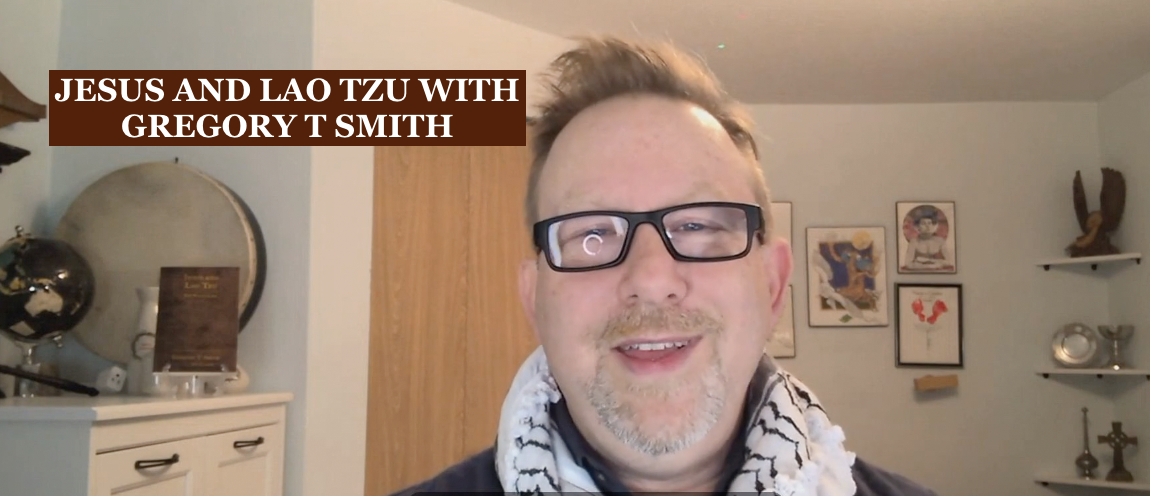
Join us for an enriching discussion with Gregory T Smith, author of a new book Jesus and Lao Tzu: The Way of Love.
Gregory is a writer, former Baptist pastor, and longtime student of comparative religion and spirituality. After more than twenty-five years in pastoral ministry, his spiritual journey led him toward a more expansive Christianity and a growing engagement with wisdom traditions beyond Christianity.
We had a great time getting to know Gregory and his work better. Our discussion takes various turns but there’s a focus on the ways in which Christians who study the Tao Te Ching can enhance their theological perspective and contemplative practices.
Check out his blog here: https://www.patheos.com/blogs/breathingspace/
TRANSCRIPT:
0:00:14 Jeff Malllinson: This is so great. We're, we're joined here by Gregory Smith, and he has a new book out called Jesus and Lao Tzu The Way of Love. And we're getting to know him just as we do this. But we've already read your book, and we're glad that you sent us an advance copy. And it's come out so people can get it wherever they want to go. Yeah.
00:00:37 Gregory T. Smith: Yeah,
00:00:37 Jeff Malllinson: Like Amazon.
00:00:38 Gregory T. Smith: they can pick it up. Amazon is the best place. Uh, I'm sure you'll have my website in your show notes and
00:00:46 Jeff Malllinson: Yep.
00:00:46 Gregory T. Smith: they can stop in there as well.
00:00:49 Jeff Malllinson: That is fantastic. So first, first of all, tell us a little bit about yourself. Yeah.
00:00:55 Gregory T. Smith: Um, well, I am, um, somebody who I'm in my second career. I am in social services now. Uh, but before that I was a pastor for twenty six years. Um, I have crossed the border, so I was born, Uh, in the US, and I now live in Canada. I was born on the East Coast. I now live on the West Coast. So I've done a lot of shifting and changing, uh, in the last decade or so. So, um, I have four children in Virginia and I have three bonus children here in British Columbia. And, uh, I'm just collecting grandbabies, so.
00:01:43 Jeff Malllinson: That's a beautiful time when you. That is great grandbabies. Um,
00:01:47 Gregory T. Smith: Yeah.
00:01:47 Jeff Malllinson: when you mentioned that your pastor for twenty six years, is that what you said?
00:01:50 Gregory T. Smith: That's right.
00:01:50 Jeff Malllinson: Um, so with what denominations or what groups were you a pastor?
00:01:56 Gregory T. Smith: I, I would probably say that my church members would agree with me when I, when I say I was never a really good southern Baptist.
00:02:05 Jeff Malllinson: Okay. Yeah.
00:02:06 Gregory T. Smith: Um, I grew up in a southern Baptist church. And when the time came to go to seminary. Um, there's the old phrase. You dance with the one who brung you.
00:02:19 Jeff Malllinson: Yeah, yeah, that
00:02:20 Gregory T. Smith: So.
00:02:21 Jeff Malllinson: makes sense.
00:02:21 Gregory T. Smith: Yeah. Um, but, uh, made a lot of great friends in, uh, the Southern Baptist denomination, uh, wonderful human beings. But, um, it was probably never the best theological fit for me.
00:02:37 Jeff Malllinson: That said, I mean, it was um. So I've been teaching for twenty five years. But for the first twenty five, it was within, uh, church related universities. And now I'm working at this high school and it's blowing my mind. I'm having so much fun because it's a different kind of freedom. But, um, one of the things I liked about the Baptist tradition, we ended up getting into the Lutheran world, but one of the things we liked about the Baptist tradition, especially when I was, um, I was the dean of theology at Colorado Christian University, which had come out of the Baptist tradition. And when there was kind of a political shift within America in general, I would constantly be overwhelmed with respect for older. It was, in my case, a lot of older women who had really grown up in the Baptist commitment to the. A certain kind of independence of thought. Don't force your kids into things as opposed to a Lutheran or Catholic understanding of, hey, no, we're you're, you know, part of the church early on and you're not really making your own individual choice. So, you know, for, for all the things you could complain about within one's own, um, specific tradition, you can also look at some of these others and say, there's something really for me, there was something really powerful about these ladies saying, hey, take the take all these American flags down that are above the, the Christian flag or whatever it would have been. And the, the number of very interesting people that we have that we've met over the years that did actually get, uh, you know, into seminary after coming through the Southern Baptist world. That's an interesting, but certainly very different in many ways from not. I won't even let you say if it's different or not, but but there's a certain, um, new refresher, at least that comes from encountering the Tao Te Ching and Lao Tzu. Right. Which is my next question is, is how did you encounter the daodejing?
00:04:30 Gregory T. Smith: I first encountered the Daodejing in ninth grade. Um,
00:04:35 Jeff Malllinson: Wow.
00:04:35 Gregory T. Smith: yeah. So world history class. Um, thank you. Uh, to my world, uh, world history teacher, Debbie Carroll, who it was her belief that, um, you can't understand world history unless you understand world culture and you
00:04:52 Jeff Malllinson: Okay.
00:04:52 Gregory T. Smith: can't understand understand world culture unless you understand world religion.
00:04:57 Jeff Malllinson: MM.
00:04:57 Gregory T. Smith: And that was a public school. So she had to be very
00:05:01 Jeff Malllinson: MM.
00:05:01 Gregory T. Smith: careful how she taught religion around the world. And one of the best ways that she could think of to do so was to teach Daoism, because Daoism could be thought of as a religion, but it could also be thought of as a philosophy. Um, if it's a religion, um, well, there's two different ways of looking at Daoism. There's, there is the religious stream of Daoism, which has its own temples and rituals and, uh, cosmologies and, you know, all of that. But then more the original Daoism, the
00:05:41 Jeff Malllinson: Mhm.
00:05:42 Gregory T. Smith: Taoism of Lao Tzu, uh, who is the founder, um, the Daoism of the Dao de Jing, which is kind of the primary holy text, if you could use the word holy. Um, it's much more of a philosophy. So
00:05:58 Jeff Malllinson: Mhm.
00:05:59 Gregory T. Smith: that way my teacher could kind of tread lightly and, um, she could say, oh, I'm just teaching a philosophy.
00:06:07 Jeff Malllinson: Right? Yeah.
00:06:07 Gregory T. Smith: But we. We read a lovely little book by Benjamin Hoff called The Tao of Pooh.
00:06:16 Jeff Malllinson: Yeah. Mhm.
00:06:17 Gregory T. Smith: And it's it's about Winnie the Pooh as kind of a the stereotypical Taoist. Uh, what what looks to us like bumbling along and and he doesn't ever really do anything. But everything happens to him. And yet everything just seems to work out okay.
00:06:38 Jeff Malllinson: MM.
00:06:38 Gregory T. Smith: Um, that is a picture of the Taoist life. So from ninth grade on, uh, I kind of I, you know, I grew up in church. Um, Christianity was always primary for me. But I also held Taoism, um, with my other hand.
00:07:00 Jeff Malllinson: MM. Did you see that as another religion or. Yeah, like in ninth grade. Yeah.
00:07:06 Gregory T. Smith: Um, I think I saw it more as a philosophy in,
00:07:11 Jeff Malllinson: Mhm.
00:07:11 Gregory T. Smith: in the ninth grade. I, I think that having grown up in a conservative Baptist church, if I had seen it as another religion, I might
00:07:19 Jeff Malllinson: Yeah.
00:07:19 Gregory T. Smith: have run away from it.
00:07:21 Jeff Malllinson: Mhm.
00:07:22 Gregory T. Smith: Um, because and I think that's one of the reasons I wanted to write this book is that there are a lot of conservative Christians who could do very well to learn from another religion. And yet there are a lot of world religions that can be kind of intimidating to you if you were raised in a conservative Christian background.
00:07:48 Jeff Malllinson: Right. Mhm.
00:07:49 Gregory T. Smith: Taoism is one of those. It's really just hard to look at Taoism in a genuine way and say, oh, I disagree. I
00:07:57 Jeff Malllinson: Right.
00:07:57 Gregory T. Smith: mean, there's just there's just so much where Taoism and Christianity line. They
00:08:02 Jeff Malllinson: Yeah.
00:08:02 Gregory T. Smith: don't say the exact same thing, but they align in a whole lot of ways.
00:08:06 Jeff Malllinson: And it certainly doesn't just put you off immediately having grown up with those texts. And if you do that, this is my experience. But it was much later. It's amazing. I remember now reading your preface, um, that that was true for you, but it's still even hard for me to remember or to even make sense of that because, um, so many people, you really got to press deep into it later in life. It would seem. So that's really cool. And it's a reminder for me to do maybe something similar with our students because it is, it's, um, my experience was always, um, especially in classical Christian, uh, schools that they're very happy to, to deal with. Um, uh, Socrates who's talking to a genie in his head or whatever, but he's a philosopher and there's kind of a, a way in which people are very comfortable with the some, you know, pagan Greek thinkers saying things. But when it's a Chinese, a Chinese thinker, or just wisdom from China, it's a little different. But I like I like setting it as philosophy. And I always when I was teaching theology, I always liked, um, talking about it in terms of, say, Justin Martyr and the idea of it, um, of Christianity itself being a philosophy. I, I've always liked philosophy, you know, it makes a lot of sense. But what I also, uh, and feel free to share only as much as you would like, but I was really struck by, in your chapter entitled A Man of Sorrows, where you say, quote, when the spiritual life feels lonely, Jesus and Lao Tzu understand so many of my friends, um, you know, we've, we can't, we don't go to church anymore, but we're still very interested. And these are the things we, we've been doing our whole lives. Um, partly for us, just as an aside is we were just reflecting on it, um, especially having other jobs now outside of the nonprofit world, I'm still teaching, but, um, having our Sundays not necessarily being another work day because when, uh, you know, in teaching religion and theology within a church related university, there would be often not only obligation to go, but sometimes filling in, um, you know, talking, doing, uh, pastor's conferences or whatever. And so, you know, so much, so much of, uh, of life can get to that. But, um, uh, it, it kind of kind of eats up at, uh, the space. And one of the things that's really cool about your book is I think a, a corrective for things that do not require people to leave their Christian tradition, but to then say, well, what is it that resonates me? Or what is it that resonates here with Jesus and Lao Tzu? I love the title, therefore, because what you're saying is exactly what a lot of people myself, of course included. But, um, but students who see a resonance in these teachings, but also, like you said, um, they don't depend, uh, well, they don't depend on a certain sense of, um, uh, prophecy. You just read it and it's really, it's, it's kind of on the face of it, you say, well, that of course that makes sense, right? That that's that's that's very good. But, you know, maybe I can ask it more bluntly. Why aren't you why aren't you pastor anymore? Like why what career shift?
00:11:20 Gregory T. Smith: Um, thank you for asking that. That is actually something that no podcaster and I've done a few podcast interviews now.
00:11:28 Jeff Malllinson: Good.
00:11:29 Gregory T. Smith: No podcaster has asked that question.
00:11:30 Jeff Malllinson: Yeah.
00:11:31 Gregory T. Smith: Um, I would, I would say that, uh, there's a couple factors there. One, I just went through so many life changes all at once. And, um, I went through a divorce. Uh, I went through, um, a lot of theological shifts. I went, uh, I was really blessed to remarry and I remarried a Canadian. I'm from Virginia. I married someone, uh, who lives in British Columbia. And behold, there are no Southern Baptist churches in British Columbia.
00:12:06 Jeff Malllinson: Yeah. No, that's a whole different world.
00:12:08 Gregory T. Smith: So even if I had wanted to remain in ministry, it would have been a denominational shift anyway. And
00:12:17 Jeff Malllinson: Right.
00:12:18 Gregory T. Smith: that could have very often or could have very easily involved, uh, some more education, which, uh, education is great, but it wasn't what I wanted to do at the moment. Also, I felt like Social services was a really good shift for me. Um,
00:12:34 Jeff Malllinson: Yeah.
00:12:34 Gregory T. Smith: it was a way to utilize a lot of the same skills that ministry uses. Uh, but it, it was taking care of those who needed care the most.
00:12:45 Jeff Malllinson: Mhm.
00:12:45 Gregory T. Smith: So, um, a lot of my clients are currently experiencing homelessness or folks who are struggling with the criminal legal system and just yeah, it was a it was a good time to make a shift for me. Um, we gave some consideration when I moved up here to, well, okay, maybe we want to plant a church. Um, and do something that's nondenominational. And then we found this wonderful little congregation that we are just attending now. And it is exactly what we would have planted if we'd felt led to do so. Uh, but we never felt led to really do that.
00:13:28 Jeff Malllinson: Yeah. That's great. We, we've kind of taken a similar, um, a similar direction as well. And it feels like in a way, even though there's been these major shifts for us, um, Stacey's in kind of around the health services and I'm still teaching kids that, um, yeah, can, can use this, the sorts of, uh, conversations that we're going to have here and, and that we've been doing for, you know, both of us for more than two decades. It is nice being able to see that. And I think that that comes out really well. That's why what's really nice about your book is, um, sometimes when people have these life shifts, it's really important to be able to have a certain set time for reflection and contemplation. And, um, I mean, we were kind of reflecting on this last couple days thinking about, you know, having this conversation with you and how, um, when people, when people get burnt out or for whatever reason, detach from a certain community, they still need a time for this reflection. And yet when I get, if I want to get a book, if somebody recommended a book to me, I find myself spending so much of my brainpower, not really reflecting or contemplating, but I find a lot of the time I'm sitting there going, okay, is this Really naive Sunday school stuff that I don't think is is powerful. Or is it so much intellectual lifting that I appreciate what this guy is saying or gal, but you're writing something and it's work also because for me, I love that too. You know, I'll be reading philosophers and it's really dense. And, um, one of the things I really like about your book is I wish I could get there. And I don't know if you have some very good people in your life that help you edit or you're just clean, but you've got clean writing. This is you don't you don't have a lot of chaff in your book. And I, I wish in anything I've written that somebody would have come along and said, let's do it like Gregory Smith's, uh, style here, let's keep this clean. Don't don't overdo it. But you still have enough in each of these, uh, these chapters to, to really wrestle with, but people need that. And so I was just wondering, you know, in your own life, how has the, um, this tradition of Lao Tzu helped you, you know, personally as you're involved in your own spiritual life and contemplation.
00:15:53 Gregory T. Smith: Well, first, thank you for the compliment on, uh, on the writing. Uh, and I want to comment on that before I get to your, your question and, um, talking about it being clean, that, that really was the goal actually is to, is to cut through, um, the excess and to just Taoism is, uh, it's really based on the idea of simplicity. And so I didn't want to make it, uh, something that was, uh, too sophisticated, you know, like where somebody had to have degrees in philosophy or something
00:16:33 Jeff Malllinson: Right.
00:16:34 Gregory T. Smith: to understand it. And I wanted to, I really wanted it to be approachable, uh, specifically, um, for Christian readers. So I modeled it to look like a Christian devotional book. So you got these little short chapters,
00:16:50 Jeff Malllinson: Right.
00:16:51 Gregory T. Smith: you know, with with a little by itself, it is a reflection. But then at the end it might say ponder, um, pray, practice. It's just got this little, little, um, reflection at the end of it. So it was designed to be that kind of devotional style without being something that could intimidate folks. Um, but your question about, you know, how, how have I lived out kind of Taoism in my, in my everyday life? I, I think I want to go back to, um, well, I could go back to ministry or I could even talk about social services either way. Um, you know, we, we can often. Develop our own, uh, very complicated way of looking at things. Well, I'll talk about theology. Um,
00:17:46 Jeff Malllinson: Yeah.
00:17:47 Gregory T. Smith: you know, uh, you go to seminary, you, you, you know, you go to all these theology classes and, and I could talk, you know, on that high level of theology with anybody who wants to do that. But at the end of the day, I have always been the kind of person who just wants to live life and kind of like Winnie the Pooh,
00:18:10 Jeff Malllinson: Yeah.
00:18:10 Gregory T. Smith: you know, and, and, you know, not be focused so much on, on all the theoretical, the theoretical things. And just like how if I'm going to sweep the floor, I want to sweep the floor.
00:18:24 Jeff Malllinson: Mhm.
00:18:25 Gregory T. Smith: You know,
00:18:25 Jeff Malllinson: Mhm.
00:18:26 Gregory T. Smith: if I want to make a cup of tea, I want to be focused on making a cup of tea. Um, and I think we just complicate things so much when we're making a cup of tea, we're thinking about deep theology or when we're making a cup of tea, we're thinking about, oh, I need to make sure I've paid my taxes or whatever it is. You know that. But the singleness of mind, I think, has always been important for me to whatever I'm doing to try to be doing that thing. Um,
00:19:02 Jeff Malllinson: Oh
00:19:02 Gregory T. Smith: that.
00:19:03 Jeff Malllinson: man, that's so good because it's also so hard having come. I mean, we met in church when we were in, you know, high school and middle school, actually middle school. And, um, and that was definitely not something that we, we had gotten. This was not a Lutheran world. This was not nondenominational. Uh, in Southern California. We're, we were in the Southern California Bible belt. I'm still trying to explain to family members how for some reason, everybody thought that going, uh, because we had come from the East Coast ourselves, new Jersey, um, family. And when we got out here, you know, my parents when I was young, we thought this was the Left Coast. This was going to be pagan and wild. And really it was megachurches, evangelicals, a lot of times people displaced looking for something.
00:19:49 Gregory T. Smith: Mhm.
00:19:49 Jeff Malllinson: Um, community. Um, but none of the things that we were to do in our lives. This is not at least. Stacy, tell me if I'm mischaracterizing your experience, but, um, none of the things that we were going to do in our lives could be valued or sacred on their own. If it was music or poetry or sweeping, like you're saying. Um, we would do it to try to trick people into coming to church or,
00:20:12 Gregory T. Smith: Right.
00:20:13 Jeff Malllinson: you know, to, to make the church pretty so that we could have the,
00:20:16 Gregory T. Smith: Mhm.
00:20:17 Jeff Malllinson: the ideas predominate. And, um, we just never were given that. And it's an important thing for a human being, let alone a person who's a spiritual seeker to have, which is a kind of a, if you could call it a spirituality of sweeping when you're sweeping. And, uh, that's true. You know, I know you, you, you mentioned in your book you'll have nods to Zen Buddhism and different things. And, um, and that that was one of my favorite things, uh, eventually to learn because we, we had, um, you know, we, we had taught and traveled in Japan and China. And there's a, there's a cultural element and I don't know if you've, um, ever run into this one thing. There's a guy, Alan Watts, he went out to Japan and he was, uh, really interested in learning from some Zen teachers at the monastery. And he found that, you know, in fact, a lot of the people that had grown up there were basically just orphans. It was like a social services thing. You don't have parents that can take care of you. They send you off and you're going to chant in the monastery. And then there are people that have, you know, statues and things, and I'm not putting this down at all. Uh, and the same thing with any, any Daoist things we were really interested in. But, um, but the idea and this was what Alan Watts was talking about, why he really liked, uh, the The work of Suzuki that introduced Zen meditation to Western audiences was that in many ways, that Zen, that thing that people find interesting about Zen really has some has a lot of, uh, heritage from its influence from Lao Tzu. And that's why it's so universal. So you could be from all, a whole, whole spectrum of different backgrounds and find value in it. And, um, and that's why, you know, like, I, I, I think that with what you're doing, especially, I like that you recognize you, this is, this is something that's going to be helpful for Christians. Um, but it's, it's really a helpful way, I think also for people to be able to get back to understanding the teachings of Jesus in a way that they might not because of all the other cultural baggage. So, you know, you kind of killed or revived two birds with one stone, as the case may be. I was going to say, um, so you mentioned like, yeah, the contemplative ness of just like being there in the moment, making a cup of tea. Um, there's also the chapter where you've talked about the mysterious darkness and there's that also the yin side that is brought up, um, in the daodejing. And in my experience a lot of times with Christianity, uh, I was taught more of not like going into that, that inner space. Um, that, that was, you know, like, don't, you don't want to empty your mind, you know, you're going to open yourself up to spirits. Maybe, perhaps, you know, emptiness is a very dangerous thing. Yeah. Um, and, and that, and that just, yeah, the inner darkness, like there's, you know, that that's not the place where you would find answers or anything good really. Um, and so I'm kind of curious, like, what with your religious upbringing, if you resonate with any of that thinking, I know you wrestle with these ideas and that chapter specifically, and I'm sure multiple times whenever brings up more the yin and the mysterious darkness. But I'm just curious about your take on, on that part. Yeah. And emptiness. Yeah.
00:23:45 Gregory T. Smith: Thank you for asking that. I actually want to I do want to answer that. And if I wander away from that, please get me back to it. Uh, because I, I really do want to address that, but I want to talk about Zen as well.
00:23:58 Jeff Malllinson: Good.
00:23:58 Gregory T. Smith: Uh,
00:23:58 Jeff Malllinson: Yeah. Yeah.
00:23:58 Gregory T. Smith: because, because this book could have very easily been, uh, Zen and Christianity just
00:24:05 Jeff Malllinson: Yeah.
00:24:05 Gregory T. Smith: as easily as it could have been Taoism, uh, in, uh, in my world religions degree. Uh, did you know, focused a lot on eastern religion and traditions. And, uh, in fact, my Zen professor in seminary is one of the people who reviewed this book. Um,
00:24:24 Jeff Malllinson: Yeah.
00:24:25 Gregory T. Smith: and he's in his nineties now. And, uh, I was just so honored that he, that he enjoyed it and he said he's looking forward to the second. Um, the second volume. So, um, you're right. Zen and Taoism are, they're, they're twins. Um, so I appreciate your observation about that. Um, so the inner darkness. When Jesus talked about, you know, when you go to pray, don't pray this way, but pray that way instead, um, the way that he said don't pray is very so in, in Taoism is the concept, as you're familiar is the concept of yin and yang, this darkness and light and they swirl together. And a lot of folks think of it as a struggle between good and evil. That that the light, the white part would be, um, good and the dark part would be evil. Um, we have to be careful with that in so many different ways. One way. Of course I'm going to just say it is racism. This idea that that white is good and dark is evil. I mean, we really have to be careful with that. Um, but another way is just understanding even within the Taoist structure, it would be incorrect to think of the young as being good and the yin as being evil. The, the young, which is the white part of the swirling black and white yin yang symbol is, is really just um, forcefulness or, um, pro, uh, projective energy. Whereas the young is more a receptive energy or a gentle energy
00:26:22 Jeff Malllinson: You mean the yen?
00:26:23 Gregory T. Smith: or the yen. Thank you for that. Yeah.
00:26:25 Jeff Malllinson: Yeah.
00:26:25 Gregory T. Smith: The, the yen, is that that or that darkness? Is that
00:26:28 Jeff Malllinson: Mhm.
00:26:29 Gregory T. Smith: that receptive or gentle energy. Um, some might use gender for that. I think we have to be careful with that as well. Some might say that the young is male and that the yin is female. These days I think we have to be careful with gendering things that
00:26:49 Jeff Malllinson: Mhm.
00:26:50 Gregory T. Smith: don't necessarily have gender. But what Jesus said is when you pray, don't stand out on the street corner
00:26:58 Jeff Malllinson: Mhm.
00:26:58 Gregory T. Smith: and make a show of your prayer. Uh, don't declare your prayer out for everyone to hear. That is a very young approach
00:27:08 Jeff Malllinson: Yeah.
00:27:08 Gregory T. Smith: to
00:27:09 Jeff Malllinson: Mhm.
00:27:09 Gregory T. Smith: praying. He said, but instead, go into your inner chamber. That's a yin approach to praying. Go into that inner chamber. And that you could say that that inner chamber is really inside of you that he's not talking about. Go into the closet in your room here.
00:27:29 Jeff Malllinson: MM.
00:27:30 Gregory T. Smith: He's saying, go into that inner chamber inside of you, that dark, receptive place, and not to think of that darkness as evil, but to think of it where you are then receptive to the Holy Spirit, you
00:27:45 Jeff Malllinson: MM.
00:27:46 Gregory T. Smith: are receptive to what God is trying to do in your own life. And so you're right, a lot of us in evangelicalism may have grown up with this idea of being. Being open is a dangerous thing.
00:28:02 Jeff Malllinson: Mhm.
00:28:03 Gregory T. Smith: You don't want to open yourself because something evil might come in.
00:28:07 Jeff Malllinson: Mhm.
00:28:08 Gregory T. Smith: Uh, it's a great way to catch a demon. Like you're going
00:28:10 Jeff Malllinson: Right.
00:28:10 Gregory T. Smith: to
00:28:10 Jeff Malllinson: That's
00:28:10 Gregory T. Smith: like
00:28:10 Jeff Malllinson: what I was
00:28:11 Gregory T. Smith: you're.
00:28:11 Jeff Malllinson: taught. Right.
00:28:11 Gregory T. Smith: Yeah, like you're going to catch the cold.
00:28:13 Jeff Malllinson: Yeah.
00:28:14 Gregory T. Smith: You might catch a demon. Um, and I've had a lot of folks who have asked me, you know, about that in, you know, throughout years of ministry people. So I don't know about this. Um, eastern meditation stuff. Uh, when I empty myself. Isn't that dangerous?
00:28:31 Jeff Malllinson: Mhm.
00:28:32 Gregory T. Smith: Well, no, because, you know, like, I have a cup of water here, and you can't put water in it if it's not empty first. And if God is trying to pour something into your life and yet you're completely full, there's no room for what God is trying to do in your life. So to empty yourself means to shed ego. It means to set aside your presuppositions. It means to set aside your judgments and to simply receive.
00:29:10 Jeff Malllinson: Mhm. Well, and even I've even heard it even to quiet that monkey brain or the part of like, whatever
00:29:15 Gregory T. Smith: Yeah.
00:29:15 Jeff Malllinson: the all of the craziness that keeps happening,
00:29:17 Gregory T. Smith: Mhm.
00:29:18 Jeff Malllinson: you know, that, um, you know, just stop that part of it and,
00:29:22 Gregory T. Smith: Mhm.
00:29:22 Jeff Malllinson: and then listen, Like
00:29:25 Gregory T. Smith: Yeah.
00:29:25 Jeff Malllinson: you said, be receptive. And I wish somebody would have told me that it's. It's not quite as tricky as you think. You know, you're going to get tricked by the imps or the demons. The the, the thing that I think that resonates with me with the Lao Tzu and, uh, Jesus teaching is when Jesus would teach, often people would say, well, he just speaks as if he's somebody with authority. And I always wondered, well, is it just the tone of his voice? Or does he have some kind of divine, you know, echo while he's talking? But, um, if you get centered in, in the context of the Gospels, the gospel, um, you it's not, it's not quite as hard, right? It's like if you are, if you are centered, if you're focused on what the, what the message is, then we're going to tease out what that means. But, um, are we dealing with something that's virtuous or something that's evil? Uh, going back to what we said about, uh, the Dao de Jing for the most part. Um, just it resonates as true. And, um, I like what Stacey gets it better. Uh, compassion. These are the three, the three treasures of Lao Tzu, compassion, minimalism, and or Wu Wei non domination. And you say, well, okay, that that's a really good way of tying it in Jesus and Lao Tzu to say, um, as long as we're playing by those rules and we're not trying to find a way to dominate each other, accumulate things, money, power, glory, that emptiness becomes creative. It becomes empowering. I love all that question.
00:31:03 Gregory T. Smith: Yeah.
00:31:03 Jeff Malllinson: Um, you chose the Steven Marshall version of the Daodejing. How did you come across that? One is to be the one to bring into your book.
00:31:12 Gregory T. Smith: Well, um, actually, I think I had a number of different
00:31:18 Jeff Malllinson: Yeah. Sorry. Yeah.
00:31:19 Gregory T. Smith: versions, um, And, uh, I think you mean Stephen Mitchell.
00:31:25 Jeff Malllinson: Steven, I'm
00:31:25 Gregory T. Smith: Yeah.
00:31:26 Jeff Malllinson: so sorry. Your
00:31:26 Gregory T. Smith: Yeah.
00:31:26 Jeff Malllinson: musician
00:31:27 Gregory T. Smith: That's okay.
00:31:27 Jeff Malllinson: friend of ours. You're
00:31:28 Gregory T. Smith: That's
00:31:28 Jeff Malllinson: so right.
00:31:28 Gregory T. Smith: okay. Um, you and I'll give you tons of credit because, uh, when, when I pointed out anybody, um, that I used that was not well, I did have one particular standard one that I used. Um, and when I use anybody else, then they got a footnote. So the,
00:31:51 Jeff Malllinson: Got
00:31:51 Gregory T. Smith: the,
00:31:51 Jeff Malllinson: it.
00:31:51 Gregory T. Smith: if there was never a footnote, I said like in the, in the, um, in the preface or whatever, I said, um, you know, that it's, it's going to be, uh, this one translation, um, unless otherwise noted. And
00:32:08 Jeff Malllinson: That's.
00:32:08 Gregory T. Smith: you happen to notice Stephen Mitchell, uh, which, which is great. Usually I use the McDonald trends or the McDonald version.
00:32:15 Jeff Malllinson: Right. Mhm.
00:32:17 Gregory T. Smith: Stephen Mitchell though, is fantastic. He, I found him to be. He's probably clearer than McDonald is. Um, I find him to be more poetic than McDonald is.
00:32:30 Jeff Malllinson: That's definitely true.
00:32:31 Gregory T. Smith: But McDonald is, um, public domain.
00:32:36 Jeff Malllinson: That helps. Yeah.
00:32:37 Gregory T. Smith: So.
00:32:37 Jeff Malllinson: These are fun things to think. Well. I'm sorry. I'm sure. No, I'm sure the reason that Stacey's asking too is because when, um, we really got into this, um. I was on a sabbatical and we were traveling around the country, and we were just listening and it was, uh, Stephen Mitchell had the audio version, so we'd go to sleep to it when we were camping. We would travel with it. We were, you know, thinking about it and, and driving around. One of the, one of the things we're always interested in is, um, the question of the value. And we think there's a very great value in being able to translate for an audience that grew up with the Christian imagery. So one of the things that you handle very well, but I'd like you to maybe speak to. This is. How is it that we can try to make these connections? Because, you know, if you're doing comparative religions, that makes
00:33:28 Gregory T. Smith: Yeah.
00:33:28 Jeff Malllinson: a ton of sense. That's what I love to do. And I'm not trying to say to students or even as I'm looking at it myself, um, think of the Dao as God, uh, or, uh, or the logos as the way in, in a very, you know, non nuanced way. But
00:33:45 Gregory T. Smith: Yeah.
00:33:45 Jeff Malllinson: at the same time, I think if you don't have a handle on it, if it's just Chinese concepts that you're not familiar with, then you don't even get to wrestle with what they're saying, you know, um, so how do you, how do you do this very delicate work where you're, you're trying to avoid, um, cultural appropriation or slapping, you know, baptizing Lao Tzu. Mhm.
00:34:08 Gregory T. Smith: That is, I think, the biggest worry. Or I'll even say fear that I had in writing this book.
00:34:16 Jeff Malllinson: Yeah.
00:34:17 Gregory T. Smith: because on the cover of the book, you know, it says Jesus and Lao Tzu, the way of Love
00:34:25 Jeff Malllinson: Mhm.
00:34:25 Gregory T. Smith: and the Way of Love is the first, the first volume, the second volume. Nobody knows. Nobody else knows this.
00:34:32 Jeff Malllinson: This is great. Thank
00:34:33 Gregory T. Smith: The second
00:34:33 Jeff Malllinson: you for
00:34:34 Gregory T. Smith: volume
00:34:34 Jeff Malllinson: telling us.
00:34:34 Gregory T. Smith: is the power of Grace.
00:34:36 Jeff Malllinson: Okay.
00:34:37 Gregory T. Smith: Um, but then underneath that, it says A Christian Companion to the Dao de Jing in really small letters. And it really is that it's written for a Christian audience.
00:34:48 Jeff Malllinson: Right.
00:34:51 Gregory T. Smith: And you got to be so careful because you're right. If if you're introduced to a concept that is so completely different from anything you've ever heard before, and you've got nothing to help it resonate, it's going to be completely lost on you. So, um, for Christians to be introduced to the Dao de Jing, you kind of have to put some concepts in Christian language.
00:35:26 Jeff Malllinson: Right?
00:35:26 Gregory T. Smith: But but to do that in a way that doesn't say, um, the Dao is equals God,
00:35:36 Jeff Malllinson: Right.
00:35:36 Gregory T. Smith: you know, because
00:35:38 Jeff Malllinson: Mhm.
00:35:39 Gregory T. Smith: the Christian concept of God is not the same thing as the Chinese concept of the Dao.
00:35:46 Jeff Malllinson: Mhm.
00:35:48 Gregory T. Smith: But they are analogous. Uh, so I think as long as we frame it with, with, uh, a bit of humility, cultural humility and say, hmm, okay, they're not saying the same thing, but they're kind of resonating on the same frequency. Uh, is one way to look at that. So one of the things that I mentioned, um, is that early Bible translators who are translating the Gospel of John
00:36:18 Jeff Malllinson: Right?
00:36:18 Gregory T. Smith: into Chinese.
00:36:20 Jeff Malllinson: MM.
00:36:20 Gregory T. Smith: You know, in the beginning was the word. Well, the word word in Greek is logos, which got translated as Tao in Chinese. In the beginning was the Dao, and the Dao was with God, and the Dao was God like. That's kind of amazing.
00:36:43 Jeff Malllinson: It's hard to beat that. I mean,
00:36:44 Gregory T. Smith: It's
00:36:44 Jeff Malllinson: and once you see
00:36:45 Gregory T. Smith: hard
00:36:45 Jeff Malllinson: it, especially
00:36:45 Gregory T. Smith: to beat
00:36:45 Jeff Malllinson: coming
00:36:45 Gregory T. Smith: that.
00:36:45 Jeff Malllinson: from a Christian background, you go, okay, this makes sense and it makes sense. By the way, why don't you keep flowing. But it makes sense of what the word what it means to say that that Jesus is the word.
00:36:56 Gregory T. Smith: Yeah.
00:36:57 Jeff Malllinson: It's almost I mean, this is exactly why I think what you what you've done is so helpful because because it whatever else a person's explorations are going to be. Being able to just shuffle the deck a little bit enough to. just ask the question what, what, what is this Greek word mean?
00:37:15 Gregory T. Smith: Yeah.
00:37:16 Jeff Malllinson: This Chinese concept does help you at least wrestle with it. And I do like the idea that the way we don't all have to say the way is equal, but the fact that human beings are dancing around this fire, something we're trying to find the way. And so that's what I think puts us all on a nice, equal playing field. But continue. Sorry.
00:37:35 Gregory T. Smith: Yeah. And and and even that English word the way, um, you know, Jesus says I am the way.
00:37:44 Jeff Malllinson: Right.
00:37:45 Gregory T. Smith: And, and so we use that word, um, which, you know, we're, we're playing with language. So we recognize that we have three different languages that we're playing with. You know, we're playing with Koine Greek. We're playing, uh, you know, with, with, uh, uh, Chinese, we're playing with English. And I think as long as we approach it saying, look, I'm playing with words here. We do it with some humility. It begins to be, um, something we can all enjoy rather than something that we have to be exacting on in, in the most scholarly of ways. Um, but the translators did say, you know, um, the logos, they translated it as the Dow, um, for Jesus to say I am the way was interesting because his later followers, those early Christians before they were ever called Christians, what were they called followers of the way.
00:38:45 Jeff Malllinson: The way. Capital W,
00:38:47 Gregory T. Smith: So.
00:38:47 Jeff Malllinson: and you do. Nice. I really love, um, because it's, it's, it's always so difficult to figure out when to capitalize. And I also have to grade students all the time.
00:38:55 Gregory T. Smith: Yeah.
00:38:56 Jeff Malllinson: And I just, in addition to your, your, your work being clean, I think you make good use of capitalization so that you can clue the reader into the idea. This isn't just some passing reference to away or something, but we're. It's so it's so hard. Our biggest problem has always been, um, virtue of. Duh. It just sounds it doesn't sound great.
00:39:19 Gregory T. Smith: Duh.
00:39:20 Jeff Malllinson: It doesn't sound great, although
00:39:21 Gregory T. Smith: Right.
00:39:21 Jeff Malllinson: maybe that's part of the fun. Yeah, it's harder to I love I don't, uh, well, we'll we'll check back in with you when you get volume two because I can see exactly where you're going. One of the main reasons I got into it is I was working on a book on sexual ethics and, um, was really interested in this idea of virtue ethics in Jesus and Lao Tzu and the, the idea that virtue is, if you want to use virtue could be one of the, the words in the title and, um, and how for me at least growing up, especially in a, in a Lutheran world, this is why I'm, its grass is always greener, right? But in the Lutheran world, we were so caught up in the exact opposite of, of, of verse or chapter one of the daodejing, the the idea of dogma being the thing itself, like, um, at least Baptists had a testimony for Lutherans. It was we don't really care about your inner heart, about any of this or your life, or even if anything's changed. But do you consent to these cognitive propositions?
00:40:23 Gregory T. Smith: Right.
00:40:24 Jeff Malllinson: So now you're all stuck asking yourself, you know, do I believe in these cognitive propositions? You skip all that and go right to the question of, am I following the way? Well, now you've got a whole you've got a whole bunch of more. I don't even say latitude. Like I'm trying to get away with something. But people walking together in, in a, in a congregation or in a mission, you know, um, um, you know, so for us, for us, it's not just what you're talking about here with the contemplation, but the fact that there is when you talk about that, that emptiness here now in, in your volume one and then moving into grace, I'll be very excited to see where you go with that because
00:41:05 Gregory T. Smith: I.
00:41:06 Jeff Malllinson: it's to me, it's the main. It's one of the main treasures of the thing.
00:41:10 Gregory T. Smith: It really is. And, um, that word duh. Uh, which for your listeners is spelled t e, uh, unless you're using a different Chinese spelling, which
00:41:20 Jeff Malllinson: Also
00:41:20 Gregory T. Smith: is.
00:41:20 Jeff Malllinson: fun for us and complicated.
00:41:21 Gregory T. Smith: Yeah, right. We have different spellings. Uh, but duh, some people will say t, uh, we'll pronounce it as day. Um,
00:41:31 Jeff Malllinson: Right.
00:41:32 Gregory T. Smith: but that word is translated as, uh, virtue. I'm playing, I'm going to play with words and I'm going to translate it as grace.
00:41:42 Jeff Malllinson: It'll
00:41:42 Gregory T. Smith: Now
00:41:42 Jeff Malllinson: be
00:41:42 Gregory T. Smith: here's,
00:41:42 Jeff Malllinson: fun.
00:41:42 Gregory T. Smith: here's how I'm getting to that, because if you have it, I'm going to run it through Greek before I get to the English. The Greek word erit, uh, means virtue. It's translated as virtue. So you read
00:41:58 Jeff Malllinson: Right.
00:41:58 Gregory T. Smith: Plato or, you know, Plato talks about arete. Uh, it's virtue, But he doesn't mean virtue in the sense of like moral uprightness
00:42:07 Jeff Malllinson: Mhm.
00:42:08 Gregory T. Smith: in the Greek is more like um. A ballerina dances
00:42:13 Jeff Malllinson: Yeah.
00:42:14 Gregory T. Smith: with virtue. Like the virtue of a ballerina is to dance.
00:42:19 Jeff Malllinson: Yeah. Mhm.
00:42:19 Gregory T. Smith: Just like the virtue of this water is to be drunk,
00:42:23 Jeff Malllinson: Mhm.
00:42:23 Gregory T. Smith: to be, to be, not to be drunk, but to be drunk.
00:42:27 Jeff Malllinson: Mhm.
00:42:28 Gregory T. Smith: Um, the virtue of the book is to be read. Uh, something is operating in it's virtue. If it is, uh, flowing or Pentecostals would say you're flowing in your anointing, you
00:42:42 Jeff Malllinson: Mhm
00:42:42 Gregory T. Smith: know,
00:42:42 Jeff Malllinson: mhm.
00:42:42 Gregory T. Smith: you're operating in your anointing. It's like you're doing the thing that you were meant for.
00:42:48 Jeff Malllinson: Mhm.
00:42:48 Gregory T. Smith: And another way of saying that about that ballerina is that she is dancing with grace.
00:42:55 Jeff Malllinson: Mhm.
00:42:56 Gregory T. Smith: Now, Christians use the word grace in the, you know, unmerited favor, right? Like I don't deserve for God to love me, but God loves me anyway, which I would debate, by the way. Uh. I think we all deserve for God to love us.
00:43:12 Jeff Malllinson: Mhm.
00:43:13 Gregory T. Smith: Um, but yeah, the word grace in English can be used in, in both of those ways. So,
00:43:19 Jeff Malllinson: Mhm.
00:43:19 Gregory T. Smith: um, I'm kind of playing on, on that double meaning.
00:43:23 Jeff Malllinson: Mhm. Well, I wish I would have met you earlier because my, uh, one of my, um, theology professors that was beloved and, uh, recently passed, um, was always kind of loved me. And we were, we always remained friends, but he was always kind of skeptical about my interest in the concept of virtue ethics as a Lutheran, emphasizing grace. If I would have just come, if I would have just come back to this and called virtue grace, we would have been fine. However, within our specific within our specific Lutheran context, it was filtered through Lutheran confessions and dogma so that it wasn't tied back as much to, um, the Greek, the biblical concept, because you're totally right. If I'm thinking about virtue as a certain performative excellence. Mhm. It does not convey what you've just what you just explained. But if I come from a Christian tradition where the word grace is predominantly just God's attitude, and not only not just is it predominantly that, you know, in a way it was a theological it for us, it was a theological sin.
00:44:25 Gregory T. Smith: MM.
00:44:26 Jeff Malllinson: Uh, there's the Latin of it was, uh, gratia infusa. We were always taught the Catholics were wrong because they thought of grace as something that was going to transform you. It
00:44:38 Gregory T. Smith: MM.
00:44:38 Jeff Malllinson: was all forensic justification. All of this, this outside of ourselves and
00:44:44 Gregory T. Smith: Mhm.
00:44:44 Jeff Malllinson: for, you know, for a whole we can't get into a whole list of reasons that resonated us with us when we were younger, because we needed grace to be forgiveness, because we had come up with so much legalism. So, you know, not drinking and dancing or watching R-rated movies or something was, um, what virtue was and grace was God not sending you to hell, even though a couple times you saw, you know, Titanic or something. And it's R-rated movie. So, um, anyway, we'll, we'll come back to that when you're done. But that is a very, that is a very helpful turn, uh, with focusing on that bit of the language. And with that, I also see sort of when you talk about graces and virtue as the essence, then I, you know, one of the things that kind of resonates with that is the sort of how both Jesus and Lao Tzu talk about, um, maybe like the importance of being like a child. Oh, yeah. Or you do good work with that, you know, and then being born again. So in that sense, it's like if you're, I feel like children are more of the essence of who, the grace of who they actually are. We complicate things as we grow up and learn things, right?
00:46:00 Gregory T. Smith: Yeah.
00:46:00 Jeff Malllinson: Um, and so at what, you know, I guess if there's anything else you want to add to that. Yeah, that language of born again. So again, you've helped us with the word grace. Maybe talk a little bit more about born again.
00:46:11 Gregory T. Smith: Let's talk about Pinocchio.
00:46:12 Jeff Malllinson: Mhm.
00:46:13 Gregory T. Smith: Um, the last chapter in the book is about Pinocchio, and, um, he was, you know, like he was this wooden boy, uh, carved lovingly by his maker. Um, but he complicated things really quick.
00:46:30 Jeff Malllinson: Mhm.
00:46:31 Gregory T. Smith: And he was, he was made in this beautiful way. Uh, but, but his ego, he brought his ego into it. Um, he, he brought his along with the ego comes deception. Um, so he's both falling prey to deception, um, where he thinks that the way that he was made is not good enough.
00:46:50 Jeff Malllinson: Mhm.
00:46:51 Gregory T. Smith: And he's like, I want to be a real boy. Um,
00:46:53 Jeff Malllinson: Mhm.
00:46:53 Gregory T. Smith: Um, he didn't want to be the way that his maker made him to be. Uh, so he falls prey to deception, but he also learns how to deceive other people. And, you know, hence the, uh, the growing nose. Um, and finally, in the end, you know, spoiler alert for those who don't even know the story of Pinocchio, um, he does become a real boy, but he becomes a real boy by self-sacrifice.
00:47:24 Jeff Malllinson: Mhm.
00:47:24 Gregory T. Smith: He becomes a real boy by cutting through all the things that, that he had, um, put in the way of, of the relationship between him and Geppetto, his, his father, um um, and in the end, you know, he, he gives himself for Geppetto. And it was in that act of self-sacrifice that he becomes real. So, um, I think that for us, like for me to say I want to be a real boy,
00:47:59 Jeff Malllinson: MM.
00:48:00 Gregory T. Smith: um, what I'm really saying is not like, I don't want to say it in the Pinocchio way at the beginning, you know, like where Pinocchio wants to be something other than the way he's made.
00:48:15 Jeff Malllinson: Right. Mhm.
00:48:15 Gregory T. Smith: But I want to say that in the way that Pinocchio learns what that really meant, you know, is
00:48:21 Jeff Malllinson: Mhm.
00:48:21 Gregory T. Smith: let's let's cut away all these things that don't matter. Let's. Okay, let's not get distracted by, um, the, um, by Pleasure Island and all the things that Pleasure Island has, has to offer. Um, let's not get distracted by what's going on on the stage, but let's, let's see. And so interestingly enough, um, it's in that inner darkness that he discovers this.
00:48:50 Jeff Malllinson: Mhm mhm mhm.
00:48:52 Gregory T. Smith: It's it's when he goes inside that whale, uh, which represents the womb or it represents, um, that place of introspection that he says, ah, now I, I've really got it.
00:49:06 Jeff Malllinson: Mhm.
00:49:07 Gregory T. Smith: And, and it's in, it's there that he comes to his place of repentance, much like Jonah coming to that place of repentance inside that belly of the fish. Um, that's, that's, that what Jesus said, go into your inner room. Um. And that's where he becomes the, the real boy, you know, or it's actually in the narrative way, in the narrative way. It's slightly after that. But, you know, that's where he goes through that transformation.
00:49:39 Jeff Malllinson: Yeah. And it's fun because you and you pick up a lot throughout your book on this. Um, the problem of ego. But And this is this is maybe yeah, definitely another conversation. But what I like about Lao Tzu, if, if I have to rank them over, um, certain forms of Buddhism is there to me at least there can be a way in which you extinguish yourself in Buddhism in a way that you don't need to. Mhm. Um, where there's to me a in Lao Tzu and in Jesus, an authentic self that emerges a true self, an embodiment, um, to use Christian language. Stacey used to do a thing we called stretching with Jesus at the, at the university Christian University, we would use Lao Tzu and Jesus for. It would have been really nice to have your book because it would have helped. Uh, it would have helped. Um, but we, but you used some great stuff by Laird and the contemplative tradition. But the, uh, thing I'm getting at, though, is that, um, um, the obliteration of yourself is not quite as beautiful and as exciting as the. Well, you're you know, you're a ripple fine. You're a you're a butterfly, you're whatever. But just go be that.
00:50:54 Gregory T. Smith: Yeah.
00:50:54 Jeff Malllinson: And there's something very powerful in that, um, even if it's temporary. And I do think that the Zen. The Zen masters pick up on this from time to time a lot, but there is also, um, you know, and I still love it. We have a volume, the Zen Death poems that are heavy and wonderful. And, and I think it's a great exercise. You kind of have to as a mortal human, you gotta, you gotta wrestle with this, um, being okay with death, but also being okay with living. And, and I think what's nice is, you know, you're in your own life. We've recently found this in our own lives doing it through legitimate career service, though to human beings, as human beings, as our true self. And when I get off track, going back to Pinocchio, it doesn't have to be phrased as, look, there's this place over there where everyone's having fun, but you've got to stay over here in the boring, churchy zone.
00:51:52 Gregory T. Smith: Right?
00:51:52 Jeff Malllinson: Rather, it's this is taking you away from the way you're getting off course.
00:51:57 Gregory T. Smith: Right.
00:51:58 Jeff Malllinson: And so it's not primarily like God's going to spank you for going over there, but you were just completely, you know, you're stuck over there.
00:52:07 Gregory T. Smith: I think that there's, there's a really, um, it's important to, to operate in that duh, in, in that anointing, uh, to, to know when, when life presents you with a diversion, you know, is that, is that the road less traveled and, and therefore I must go that way. Um, or is that a distraction? Uh, and so kind of living in, in the center, um, kind of like being being that hole in the spokes of the wheel, that that one center piece, that
00:52:49 Jeff Malllinson: Such
00:52:49 Gregory T. Smith: around which
00:52:49 Jeff Malllinson: a great
00:52:49 Gregory T. Smith: everything
00:52:50 Jeff Malllinson: image.
00:52:50 Gregory T. Smith: revolves.
00:52:50 Jeff Malllinson: Yeah.
00:52:51 Gregory T. Smith: Living a centered life will help you to do that. But once you once you can do that, it's amazing to find out how, um, setting ego aside in the positive sense, not, not in the self denying sense, um, but in the. In the sense of saying I am, I am the, the empty space around which
00:53:16 Jeff Malllinson: Yeah.
00:53:17 Gregory T. Smith: the wheel revolves. Um, when you do that, everything does fall into place like Winnie the Pooh. So I'll tell the story of, of Jesus and he's, um, he's teaching and he's just, you know, doing his thing, um, telling, telling stories like he does. And, um, somebody comes up to him and says, my daughter is about to die. Can you come and heal my daughter? Now, Jesus could have gotten upset by that because he's teaching. He's got something important in his noggin that he see how I use that word?
00:53:58 Jeff Malllinson: Thank you.
00:53:59 Gregory T. Smith: He's got
00:53:59 Jeff Malllinson: Thank
00:53:59 Gregory T. Smith: something
00:53:59 Jeff Malllinson: you.
00:53:59 Gregory T. Smith: important in his noggin that he wants to teach. And this person is coming and interrupting. And I can think of times when I've been preaching and I was not flowing in the anointing, and there have been interruptions in the preaching. And I was like, ah, rack em, rack em, you know, like, uh, I got annoyed because it should be all about me and the things that I want to teach because I've got this thing that's important. But Jesus doesn't do that. He doesn't say, oh, you know, hold your horses and I'll get to you. He actually allows himself to be interrupted and says, okay, I'm going to flow in this moment. And in flowing he he gets on the road with this guy and they're walking down the road. And this woman reaches out and touches the hem of his garment. And Jesus could have turned around and said, wait a minute, I'm on my way to go heal this man's daughter. But he doesn't. He allows the distraction or he allows the diversion. I'll put it that way. And by allowing that diversion, he takes his own plan and his own path and his own ego out of the way. He says, no, I'm going to turn aside and I'm going to and I'm going to impart grace to this one. And so she's healed. And that took so much time that the worst thing happens. Like, if Jesus had not allowed himself to be diverted, maybe he would have gotten to Jairus house on time and maybe the little girl wouldn't have died. But because he allowed the distraction, she died. And then he goes and he heals her and raises her up. So what we get from that is that by being willing to flow like water, uh, by, by taking our ego and setting it aside and saying, I'm not going to think that I'm so important that it's all about me and it's all about my agenda. Everything falls into place in the right way. And I can think of times when, uh, oh man, I can think of times in ministry when I just showed up at at the hospital room, just at the right time, you know, just as that thing was happening where they needed me there. And I had no plans for the day. I was just kind of floating, uh, or flowing like water that day. And, um, the spirit just brought me there.
00:56:39 Jeff Malllinson: I'm I'm very, um, I was very intrigued by your take on, uh, what the biblical theologians call kenosis, where Paul talks about Jesus emptying himself. And you say, well, you know, some some Christians will focus on the idea that Jesus, uh, does not draw upon or demand respect for his divine privileges and all this, but that Jesus himself emulates this way, just like you're talking about. Be imitators of Christ. This is something that you could spend a lot of time trying to make complicated, but what you've just described is something in your own life and the life of the ministry of Jesus that worked. But, um, maybe so that I don't do do an injustice to it. Um, what, what is this emptying that Jesus does? And how does it fit with the with Lao Tzu?
00:57:35 Gregory T. Smith: Well, um, you kind of started it on it. So, uh, that, that we talk about Jesus emptying the divine privilege. He doesn't empty himself. If we really want to be orthodox, you know, we would say Jesus doesn't empty himself of divinity. He still is God in the flesh, but he empties himself of divine privilege. We could say. Um, so that he doesn't fully operate as the one in whom we live and move and have our being. You know, we could say that that's Christ. Uh, but then he just becomes Jesus. And by taking on this, this messy, bloody, pulpy human flesh, um, he's just emptied that divine privilege and lives as Emmanuel, God with us. So that takes a lot of, of, uh, strength to be able to become the lowliest, um, you know, it takes a lot of, um. A lot of spirit in order to make yourself nothing. So when we follow that way, um. Then we can, we can wash the feet of the person who lives on the street. Um, uh, which I did one time, uh, when I was in college, we went to New York City. It was the first time I'd ever worked with people who were unsheltered, which is what I do as a career now.
00:59:07 Jeff Malllinson: Now it's
00:59:07 Gregory T. Smith: So,
00:59:07 Jeff Malllinson: your thing. Yeah.
00:59:08 Gregory T. Smith: so, but the first time ever that I had ever worked with people who were unsheltered, uh, was I was in college and we went to New York City and did a foot washing clinic. And it was April, which meant that a lot of these folks had not taken their shoes off for five
00:59:25 Jeff Malllinson: In a
00:59:25 Gregory T. Smith: months.
00:59:26 Jeff Malllinson: while. That's got to be something.
00:59:28 Gregory T. Smith: Whew. And, um. You've. You've got to set yourself aside,
00:59:35 Jeff Malllinson: Mhm.
00:59:36 Gregory T. Smith: you know. And I think that's what Jesus did is he set himself aside. Um, one last, one last story, uh, that I tell about Jesus and setting himself aside is I think when we think about the resurrection stories, that's like the glory, right? It's like,
00:59:57 Jeff Malllinson: Mhm.
00:59:57 Gregory T. Smith: you know, um, all the earthly stuff, the messy, pulpy, bloody stuff. Um, we go, oh, well, you know, of course he, he set himself aside for that, you know, but once he's resurrected, we go, oh yeah, now we get now we get the essence of divine Jesus. Except he still set himself aside. So Jesus is on the way to a to I said the I mixed two words there.
01:00:23 Jeff Malllinson: I hear you.
01:00:23 Gregory T. Smith: Um, not
01:00:24 Jeff Malllinson: Damascus.
01:00:25 Gregory T. Smith: not Damascus, but
01:00:27 Jeff Malllinson: Emmaus?
01:00:27 Gregory T. Smith: a man. He's on the way, on the way to
01:00:29 Jeff Malllinson: Yeah.
01:00:29 Gregory T. Smith: Emmaus. And he comes across these two disciples, and they're just chit chatting about everything that's been happening in Jerusalem. And he could have said, it's me. You know, he could have just, like, unleashed all
01:00:44 Jeff Malllinson: And
01:00:44 Gregory T. Smith: the divine
01:00:44 Jeff Malllinson: all the fullness.
01:00:45 Gregory T. Smith: light. Oh, yeah. All the lightning out of his fingers and everything.
01:00:47 Jeff Malllinson: Mhm.
01:00:48 Gregory T. Smith: But he doesn't do that. He just
01:00:49 Jeff Malllinson: Mhm.
01:00:50 Gregory T. Smith: he just talks with them on. Oh, here's that word again. On the way.
01:00:55 Jeff Malllinson: Yeah.
01:00:55 Gregory T. Smith: He just talks
01:00:56 Jeff Malllinson: Come
01:00:56 Gregory T. Smith: with them
01:00:56 Jeff Malllinson: on now.
01:00:56 Gregory T. Smith: on on the way.
01:00:57 Jeff Malllinson: That's
01:00:58 Gregory T. Smith: And
01:00:58 Jeff Malllinson: right.
01:00:58 Gregory T. Smith: and then they get to evening time and they're just sharing a meal. And it must be something in the way that he breaks the bread or something in the way that he shares the cup. I don't know what it is, but suddenly they recognize him and instead of going, it's me. He disappears. He freakin takes himself out of the way
01:01:20 Jeff Malllinson: Interesting.
01:01:21 Gregory T. Smith: so that they're not falling down on their face and worshiping him as he as he shoots lightning out of his fingers. He takes
01:01:28 Jeff Malllinson: And isn't
01:01:28 Gregory T. Smith: himself
01:01:29 Jeff Malllinson: that. Yeah.
01:01:30 Gregory T. Smith: even in the resurrection.
01:01:32 Jeff Malllinson: Yeah.
01:01:32 Gregory T. Smith: He makes himself out of the way. So I
01:01:35 Jeff Malllinson: Man.
01:01:36 Gregory T. Smith: think that's what we're called to do.
01:01:38 Jeff Malllinson: That's a I mean, I listen, can you make sure you let us check in with you after the second volume because this is too good. There's so many things. Um, but that's a really, I think that's a really good way to, to, to kind of bring it, um, to have a little bow on it because it's kind of like to me, it's like the eastern, the last ten years or whatever of working, I was starting to get really interested in, um, some of the eastern tradition and I mean, in the Christian church, I, uh, there's a dude named, uh, Abbot Trifon who's, uh, Eastern Orthodox monk who's down on Vashon, Vashon Island. Yeah. Excuse me. When we lived up in Seattle, uh, spent a lot of time with him. He he was always a fun guy because he would he would see me, and I'd be all stressed off, stressed about work or whatever, and come over. Look like Santa Claus with a big, you know, outfit. Give me a hug, he said. You know, you Protestants too, worried about hell or whatever he was saying. Like you're in a living hell because you're all up in your head, you know? And then he would, we would go places and there'd be people coming in from the, uh, we were in Everett, Washington. So we'd have these guys coming off their Navy guys. They'd be pissed off. I don't know what, you know, whatever they had been through. And he would just melt them in a beautiful way. Um, and he and I was just remembering that I said, if there were more people that could be a part of this conversation where the way you're talking about here with the emptying yourself, he's not coming. He obviously was known. He looked like a monk. You're not going to confuse him with anybody other than a monk. Um, but one of the things, uh, that he, that he kind of clued me into was this interesting idea in the eastern church of, um, Please don't let this get off the off the rails Stacey, I want I'm trying to wrap it up, but Jesus could was Jesus capable of sinning? Which was, uh, completely out out of the question in the West. And I'm not too worried about the doctrinal question so much as the, the the helpful growing up Protestant, the helpful engagement with Ethiopian Christians or Eastern Christians at least to just pose the question that I didn't even think was a question we could ask because I'm not so interested in whether Jesus could sin as much as. Why is it that he can't? Because you've un humanized him, you know, like, you know, he's he's not that. And so this, this very human moment on the road to Emmaus with the disciples that is on the way is the way. But then, you know, this is the this is the nice thing. Whatever you're doing, you still got that pastor's touch. I mean, you've got you know what I'm saying? You know, how to how to chef this up. And so that's why I, we really do, uh, do thank you for reaching out to us because we have been in the midst of our own kind of reset with work, and we're back into, uh, getting some things done. We are we're coming close to the end of our cycle of having talked about all eighty one chapters. We
01:04:36 Gregory T. Smith: Mhm.
01:04:36 Jeff Malllinson: might do it again. One of the reasons we slowed down was we got to, um, chapter eighty, which happens to be my favorite only because I'm into political thought. It depicts this kind of ideal society,
01:04:47 Gregory T. Smith: Mhm.
01:04:47 Jeff Malllinson: the kingdom, in a, in a different way.
01:04:49 Gregory T. Smith: Yeah.
01:04:49 Jeff Malllinson: Um, but as far as, uh, as far as I'm concerned, anybody definitely, if you've grown up in the church, but anybody who's interested in these conversations and wants to be able to actually bring it into their own contemplation should definitely check out your book, Jesus and Lao Tzu The Way of Love. I just do want to open up really quick. And is there anything that we didn't cover that you would like to mention before we. Yeah, we missed something that you want to make sure. Yeah,
01:05:17 Gregory T. Smith: Uh, we've covered a lot,
01:05:18 Jeff Malllinson: yeah.
01:05:19 Gregory T. Smith: uh, in in just an hour. So I think this has been fantastic. Um, the book is available on Amazon and, uh, I'll send my, um, the URL to my website, um, to you so you can put it in the show notes.
01:05:34 Jeff Malllinson: Right
01:05:34 Gregory T. Smith: And
01:05:34 Jeff Malllinson: on.
01:05:34 Gregory T. Smith: if,
01:05:34 Jeff Malllinson: Of course.
01:05:34 Gregory T. Smith: if folks want to go there, they can follow a path and follow a path.
01:05:39 Jeff Malllinson: That's good. That's good. Follow the way.
01:05:41 Gregory T. Smith: They can follow the way.
01:05:42 Jeff Malllinson: Way
01:05:42 Gregory T. Smith: Uh,
01:05:42 Jeff Malllinson: to the way!
01:05:43 Gregory T. Smith: and, and, uh, there's a free study guide as well,
01:05:46 Jeff Malllinson: Oh. That's good.
01:05:46 Gregory T. Smith: uh, for anybody who wants to do it, like as a group study. So, uh, that's available as well for free. Uh, and then I also have a blog, which is called Breathing space on Patheos.
01:05:59 Jeff Malllinson: Very nice.
01:05:59 Gregory T. Smith: So folks can check me out there as well.
01:06:02 Jeff Malllinson: Well, we love Bellingham. I know you're only there. Half your half your week. Yeah. But. And we love we love bc you know. So enjoy it. And next time we're up there we'll try to find a way to connect.
01:06:12 Gregory T. Smith: That would be fantastic.
01:06:14 Jeff Malllinson: Awesome.
01:06:14 Gregory T. Smith: So Jeff,
01:06:15 Jeff Malllinson: Well thank
01:06:15 Gregory T. Smith: Stacy,
01:06:15 Jeff Malllinson: you.
01:06:16 Gregory T. Smith: thank you so much.
01:06:17 Jeff Malllinson: All right. Peace to you, my man.
01:06:19 Gregory T. Smith: Peace to you.